018: Spotlight on Case Study
Semiotics for Designers and Illustrators book newsletter #18

My Semiotics for Designers and Illustrators book’s third case study is close to my creative heart as it discusses aesthetics in way that I found was a revelation. Aesthetics not as passive beauty but as proactive facilitation to interpret meaning. In The Proactive Aesthetic - Pragmatic Aesthetics in Semiosis I sidestep from Charles Sanders Peirce’s pragmatic semiotic theory into other fellow pragmatists: John Dewey and Richard Shusterman.
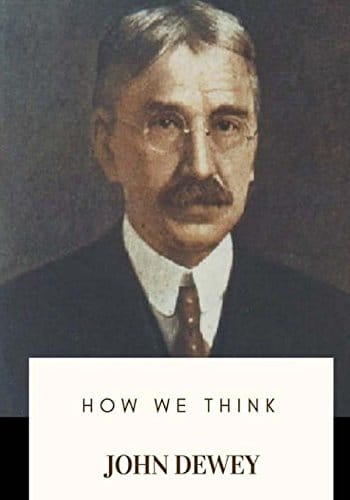

Original pragmatist John Dewey's How We Think book and Richard Shusterman's Pragmatist Aesthetics book.
From a pragmatic perspective, aesthetics is participatory and not passive. An ‘aesthetic’ is a participatory relationship between your semiotic representation of the concept and your audience’s reception of what they interpret as being visually represented. Your ‘aesthetic’ is not a function of subjective beauty, but is meaning-bearing, and visually communicating a semiotic concept to that audience. In John Dewey’s seminal work Art as Experience1 he introduces the state of aesthetic experience.

Dewey’s aesthetic experience helps to establish the pragmatic understanding of the effect an aesthetic has on its audience and strengthens the argument that your aesthetic is not passive but proactive in conveying meaning. Therefore, a pragmatic view of aesthetics considers its effect on the audience as an embodied and sensual interaction, to attract and retain the target audience’s attention.
This case study then introduces you to the work by Richard Shusterman, who has been influential within Interaction Design and audience-centric designing. It was his seminal 1992 book Pragmatist Aesthetics: Living Beauty, Rethinking Art about the function of the aesthetic as proactive. This resonated with me, as I had also been inspired by design Professor Jorge Frascara’s statement that visual communicators are facilitators of behavioural change in their target audience.
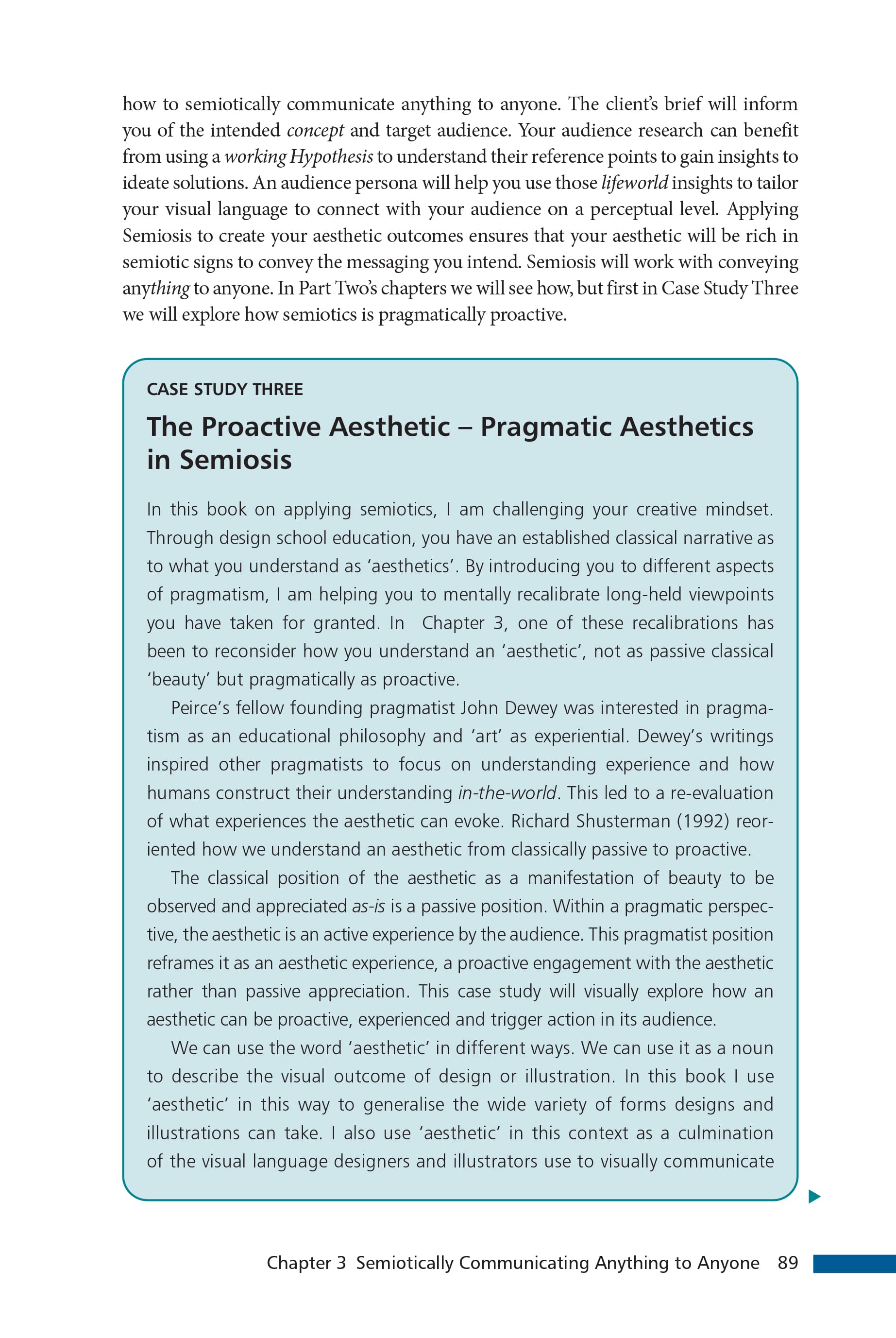
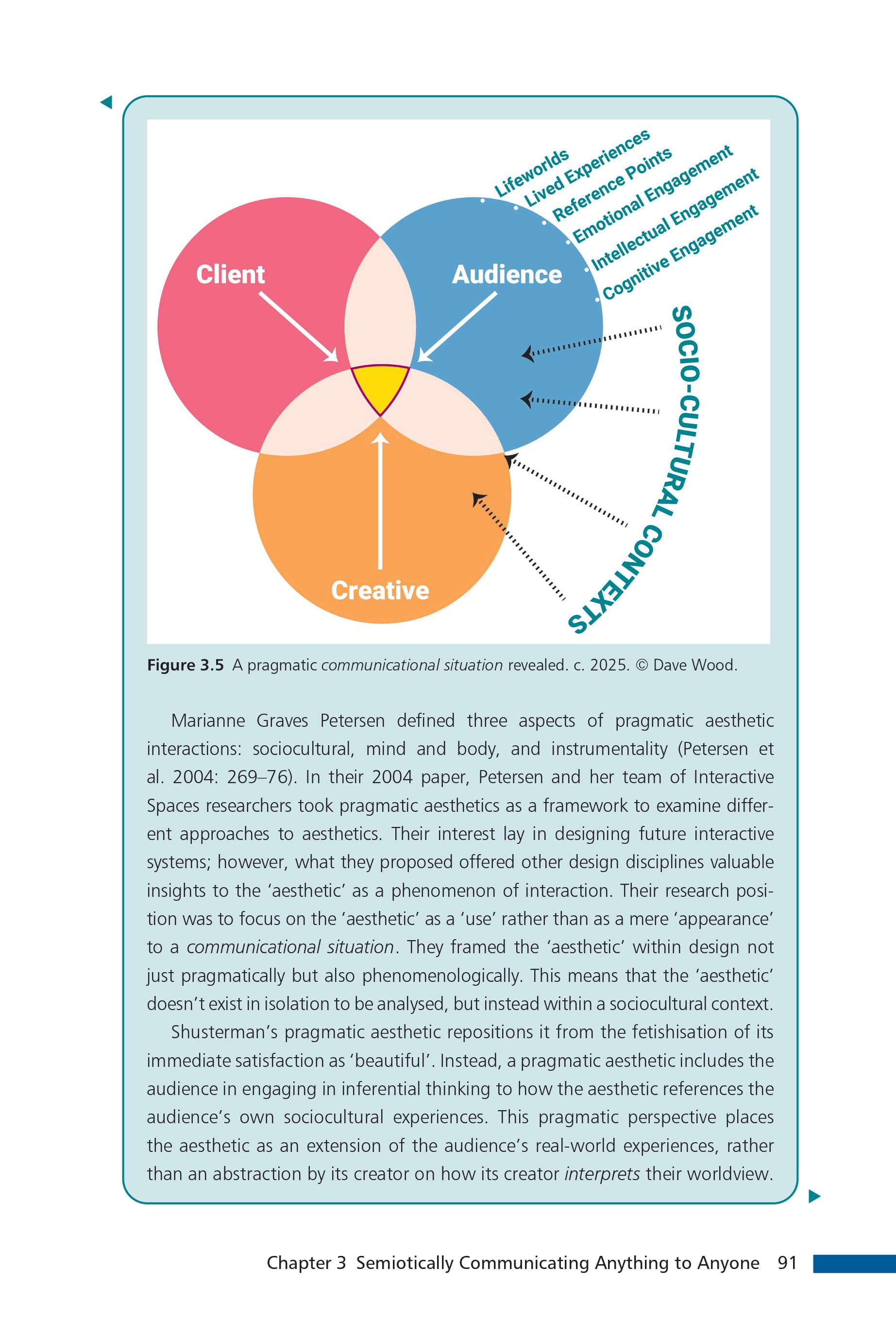
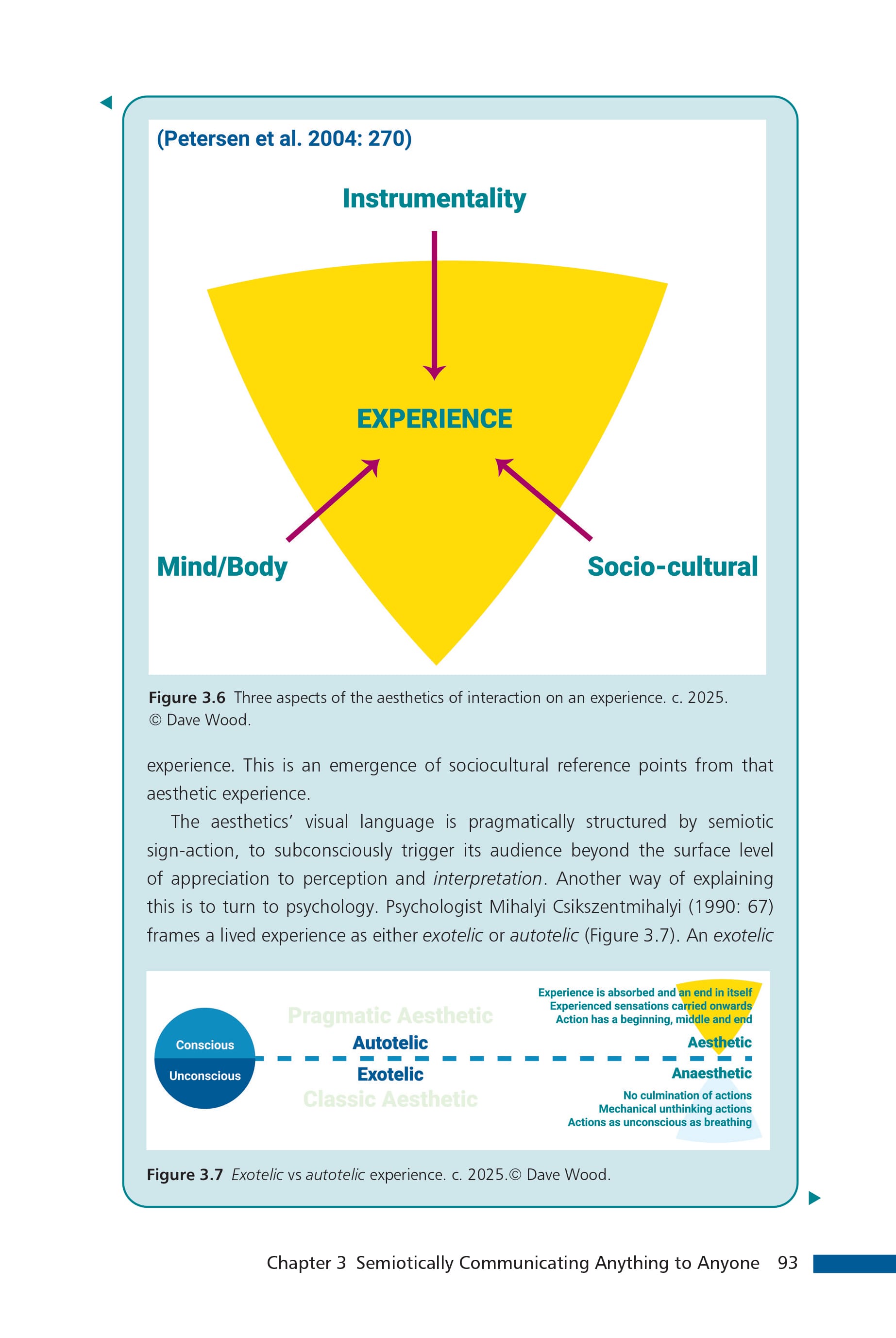
Three pages from case study three showing new diagrams to explain the theory.
In this case study I also draw on crucial academic work on aesthetic interaction from Marianne Graves Petersen and her team, psychologist Mihalyi Csikszentmihalyi’s work on ‘Flow’ and others to contextualise pragmatic aesthetics as part of pragmatic semiotic sign-action. This case study will take you deeper into pragmatic aesthetics and help you to recalibrate your existing creative mindset to take a pragmatic semiotic turn in how you understand visual communication.
My case study concludes that by framing your aesthetic pragmatically, you designers and can illustrators reframe its purpose as a semiotic proxy for a deeper meaning beyond the denotative. Your aesthetic does have an effect on your target audience’s interpretation of what they see being represented. Therefore, I am confident that my third case study will be a revelation to you too.
The Book
Semiotics for Designers and Illustrators is scheduled to be published in February 2027 by Bloomsbury Visual Arts. Check back to this newsletter for pre-ordering news and even discount codes …watch this space.
The Videos
Case study three is also previewed in Semiosis 101’s season 5 episode 5.7 on Patreon and YouTube.
These Semiosis 101 season 5 video episodes will be published on my @Semiosis101channel over the next few months on YouTube. Or you can watch the entire season 5 of twenty Semiosis 101 episodes months ahead of YouTube with a Semiosis 101 Patreon subscription.
With a Patreon subscription you’ll also get a Semiosis 101 Producer credit on all future YouTube editions (plus other exclusive Patreon-only video content).