023: Spotlight on Chapter Six
Semiotics for Designers and Illustrators book newsletter #23
In previous Semiosis 101 episodes and in my Semiotics for Designers and Illustrators book, I have explained that Charles Sanders Peirce’s pragmatic semiotic sign-action (Semiosis) has an effect on how your audience interprets visually communicated meaning. These effects range from simple to complex and can be summarised in plain creative-centric language as an immediate effect, a dynamic effect and a final effect.
This is a crucial difference between Peirce’s semiotic theory and other semiotic theories. In Semiosis there is a triad of effects on the mind of the target audience. In Semiotics for Designers and Illustrator’s chapter six - Building Effective Semiotic Sign-action - we explore these effects, beginning with immediate semiotic building blocks of meaning-bearing visual elements. In it I cover the initial steps within weaker visual semiotic signs that trigger the interpretive act.
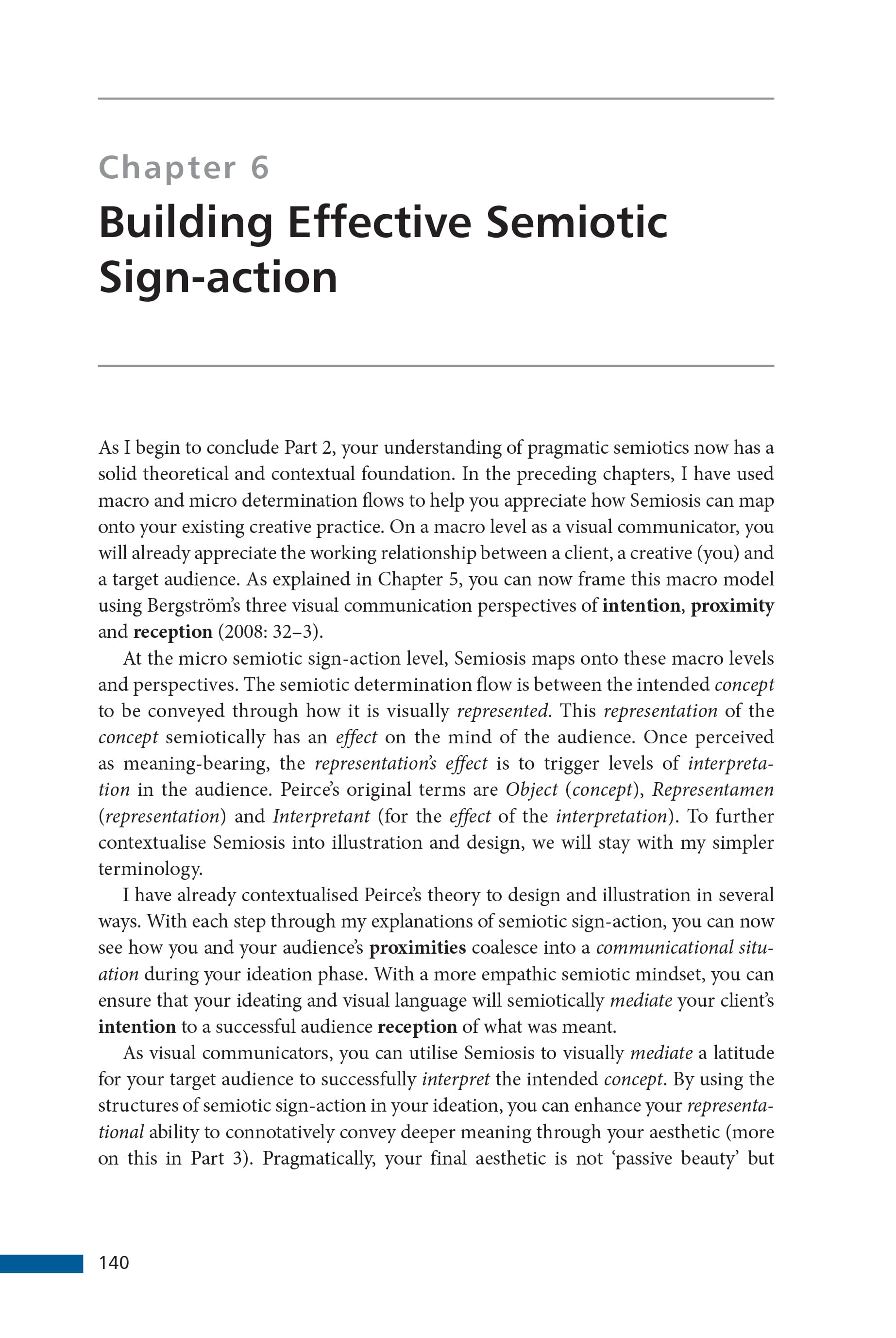
Chapter six then progresses up the ten semiotic sign classifications and focusses on dynamic semiotic mediation of meaning. The dynamic effect on your audience’s interpretations is now able to suggest connections to existent things known to your audience. With sustained audience attention, your semiotically enhanced visual language is mediating your visual language’s effect on your audience’s perception of deeper connotative meaning.
Your Final shaping of semiotic sign-action employs the higher power levels of Perception, Communication and Delivery. This part of the book helps you to understand how your visual language semiotically mediates an audience to finally agree a general socio-cultural interpreted resolved meaning - THIS visual element (representation/semiotic sign) is a proxy for THAT deeper meaning (intended concept).
Chapter six concludes with an examination of how these final higher six levels of semiotic signs classes, become the semiotic visual proxies for the concept you are visually communicating.
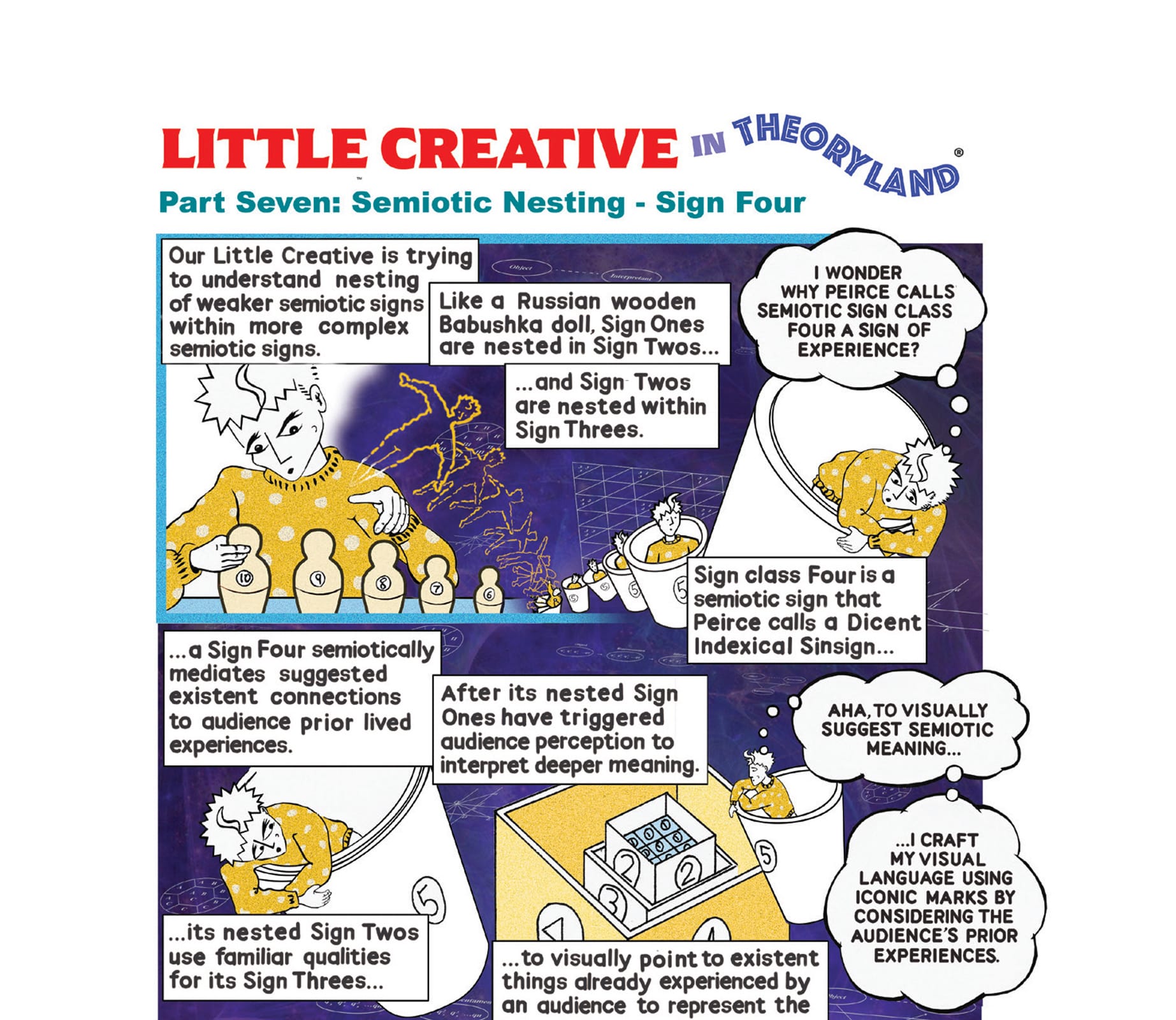
To act as your guide through this application of semiotic theory, our Little Creative in Theoryland® strip takes a visual deep dive into explaining how the theory works across these three semiotic power levels. In this seventh strip-based infographic, our eponymous Little Creative gets to grips with how lower level semiotic sign classes are nested in higher semiotic sign classes to power how they convey meaning to an audience.
Chapter six also closes the second part of the book, so that the final third can address more tools to apply pragmatic semiotic theory into your existing illustration or design ideation phases to improve audience engagement and enhance how you visually communicate.
The Book
Semiotics for Designers and Illustrators is scheduled to be published in February 2027 by Bloomsbury Visual Arts. Check back to this newsletter for pre-ordering news and even discount codes …watch this space.
The Videos
Chapter six is also previewed in Semiosis 101’s season 5 episode 5.11 on Patreon and YouTube.
These Semiosis 101 season 5 video episodes will be published on my @Semiosis101channel over the next few months on YouTube. Or you can watch the entire season 5 of twenty Semiosis 101 episodes months ahead of YouTube with a Semiosis 101 Patreon subscription.
With a Patreon subscription you’ll also get a Semiosis 101 Producer credit on all future YouTube editions (plus other exclusive Patreon-only video content).