024: Spotlight on Case Study Six
Semiotics for Designers and Illustrators book newsletter #24
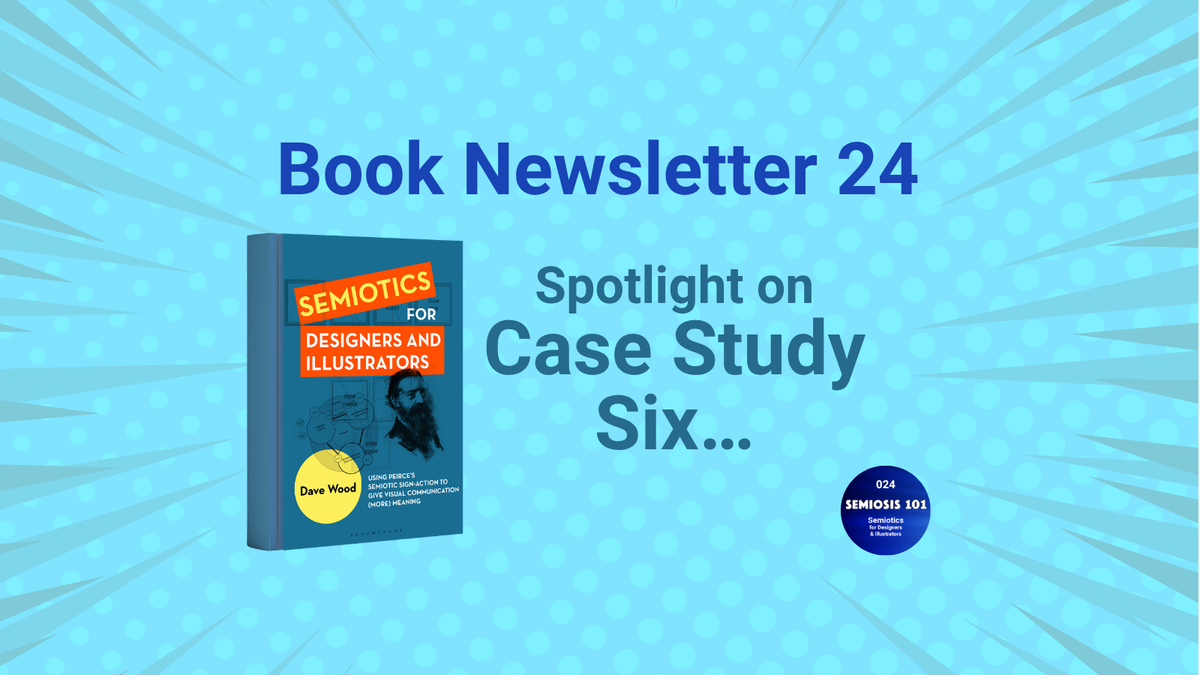
In my 2027 Semiotics for Designers and Illustrators book I use two case studies focussing on the work of international branding agency How&How. This came about due to a conversation with an alumni from the graphic design degree I was Programme Director for at Duncan of Jordanstone College of Art and Design (DJCAD) in Dundee, Scotland.
Eilidh Reid (who since writing the book has moved on from How&How) contacted me offering to give a Graduate’s Journey talk to my then design students. While we discussed this talk it became clear that Eilidh had an illustration system she used within branding that screamed “semiotics!”
Eilidh agreed to talk over two of How&How’s recent branding campaigns and from these conversations from 2024 I developed two semiotic case studies. In this newsletter, I’ll spotlight the first case study Sweet Semiosis - Branding Wild Thingz with Illustration and Design. (The second case study will be spotlighted in two newsletter’s time.)
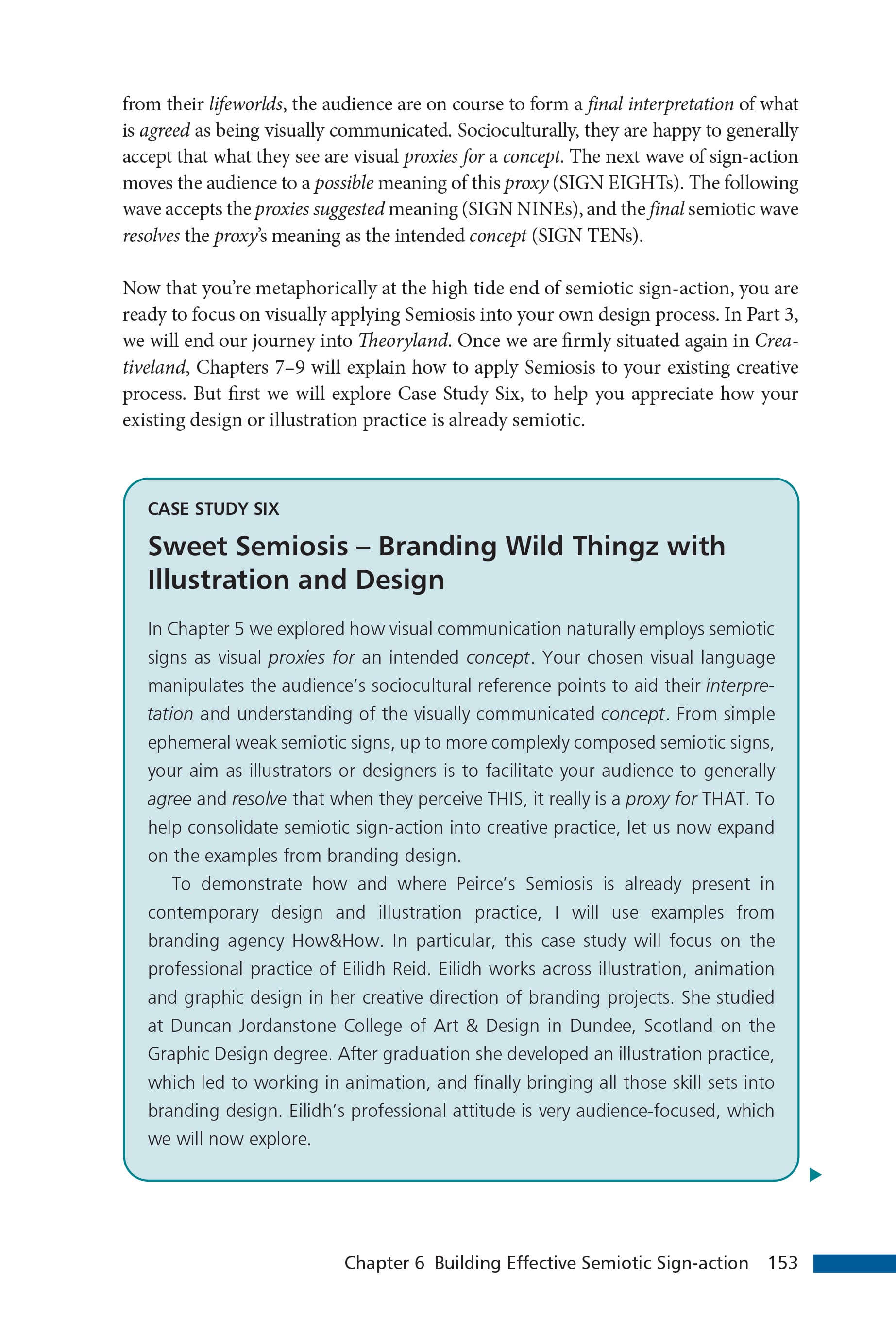
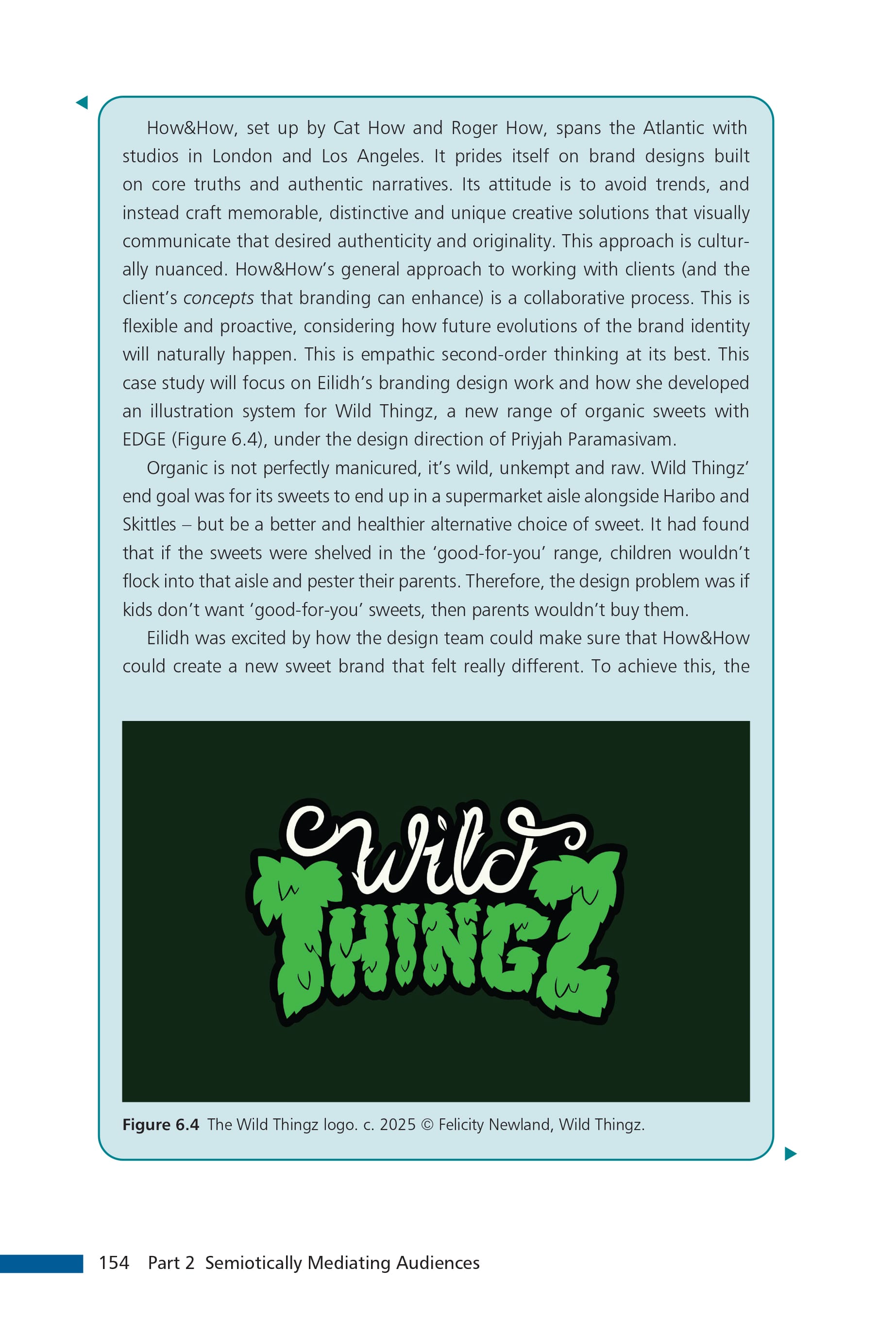
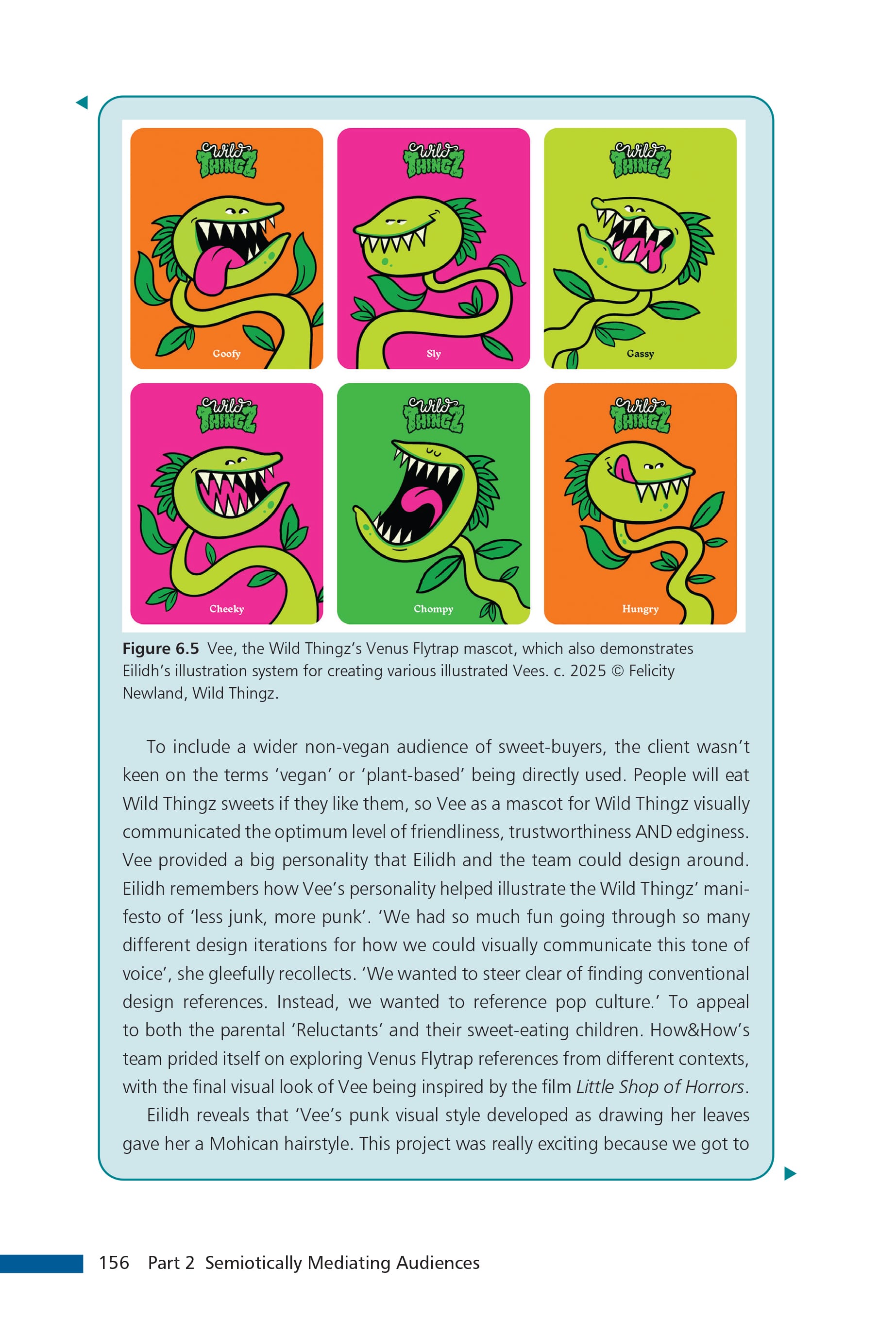
Selected pages from case study six on How&How's branding of Wild Thingz.
How&How’s Wild Thingz case study ends my book’s second section on semiotically mediating audiences. In this sixth case study Eilidh explains her illustration system for the first time, which How&How used to develop the Wild Thingz branding campaign.
Wild Thingz are new organic sweets brand that needed to visually communicate a sense of “edge!” Rather than sit in supermarket aisles next to the “wholesome” products, Wild Thingz needed to compete with Haribo et al. on the sweet shelves.
To achieve this Eilidh and the How&How creative team developed its visual identity around VEE - a carnivorous plant. The case study explores How&How’s creation of the visual language for Wild Thingz. Against this I mapped where the principles of Peirce’s semiotic theory was present.
In doing so, I acknowledge the semiotic chicken/egg conundrum. If designers and illustrators work semiotically without already understanding semiotic theory, how has semiotics been applied?
The simple answer to that chicken/egg conundrum is that Peirce’s Semiosis’ principles do map to general visual communication practice from ideation through to aesthetics.
While semiotic principles are present in How&How’s designers and illustrators work, they were not aware of how pragmatic semiotic theory was instinctively facilitating their creation of the branding.
It is this very point that case study six, spotlighting the Wild Thingz brand is making…semiotic principles are instinctively applied whether understood or not. My semiotics book, written in plain creative-centric language, plus my Semiosis 101 videos, are the first step in making illustrators and designers aware of semiotics and to then develop a semiotic mindset.
The Book
Semiotics for Designers and Illustrators is scheduled to be published in February 2027 by Bloomsbury Visual Arts. Check back to this newsletter for pre-ordering news and even discount codes …watch this space.
The Videos
Case study six is also previewed in Semiosis 101’s season 5 episode 5.13 on Patreon and YouTube.
These Semiosis 101 season 5 video episodes will be published on my @Semiosis101channel over the next few months on YouTube. Or you can watch the entire season 5 of twenty Semiosis 101 episodes months ahead of YouTube with a Semiosis 101 Patreon subscription.
With a Patreon subscription you’ll also get a Semiosis 101 Producer credit on all future YouTube editions (plus other exclusive Patreon-only video content).