016: Spotlight on Case Study Two
Semiotics for Designers and Illustrators book newsletter #16

In case study two of my 2027 Semiotics for Designers and Illustrators book by Bloomsbury Visual Arts, I discuss The Archaeology of Semiosis as we examine pragmatic semiotic theory as a tool to reveal layers of cultural meaning.
Case study two’s first part examines Charles Sanders Peirce’s semiotic theory within archaeology and palaeontology. Then our attention moves to semiotically understanding the built environment through its application in architecture. This then gives us a firm base to then finally explore Semiosis as a method to examine culture through a pragmatic semiotic lens. This final part focuses on the research of Samaneh Eshraghi Ivari, a PhD graduate using a Semiosis toolkit exploring urban cultural sustainability.
I first met Samaneh when she contacted me to transfer her PhD to study under my supervision when I was the graphic design Programme Director at Duncan of Jordanstone College of Art & Design (DJCAD) at the University of Dundee (UoD). This transfer fell through thanks to the dire financial state that the UoD Executive had thrown DJCAD into.
However, we stayed in touch, and I followed Samaneh’s award-winning research and she agreed to let me feature some of it in this third case study on the Archaeology of Semiosis.
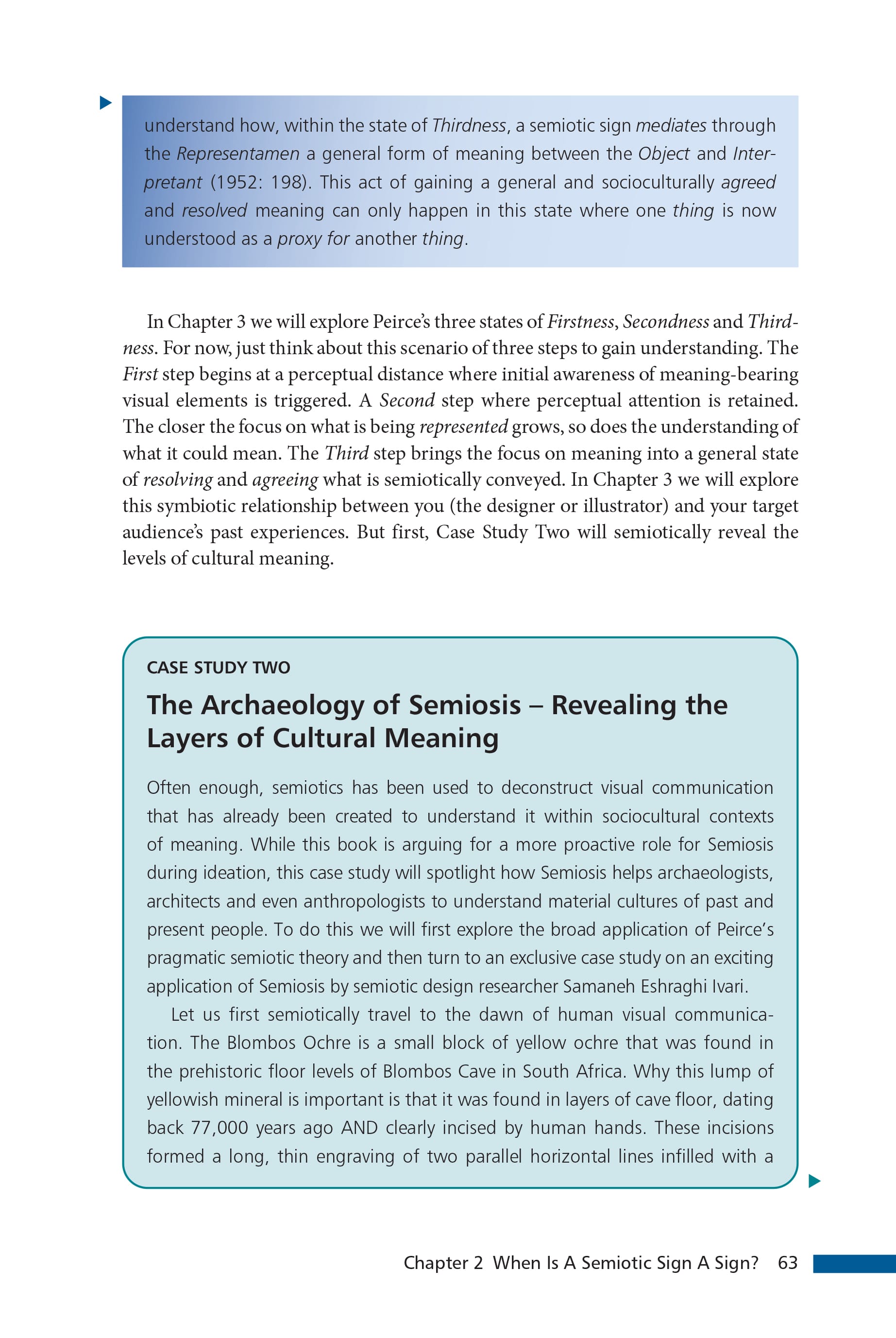
In this case study I first take you back to the dawn of humanity and the recorded roots of our ability to visually communicate, back to our pre-semiotic Stone Age roots of abstract thinking through Symbolic representation. It was the archaeologist Richard Preucel who argued that archaeology is “a semiotic enterprise” as material culture cannot be passive.1
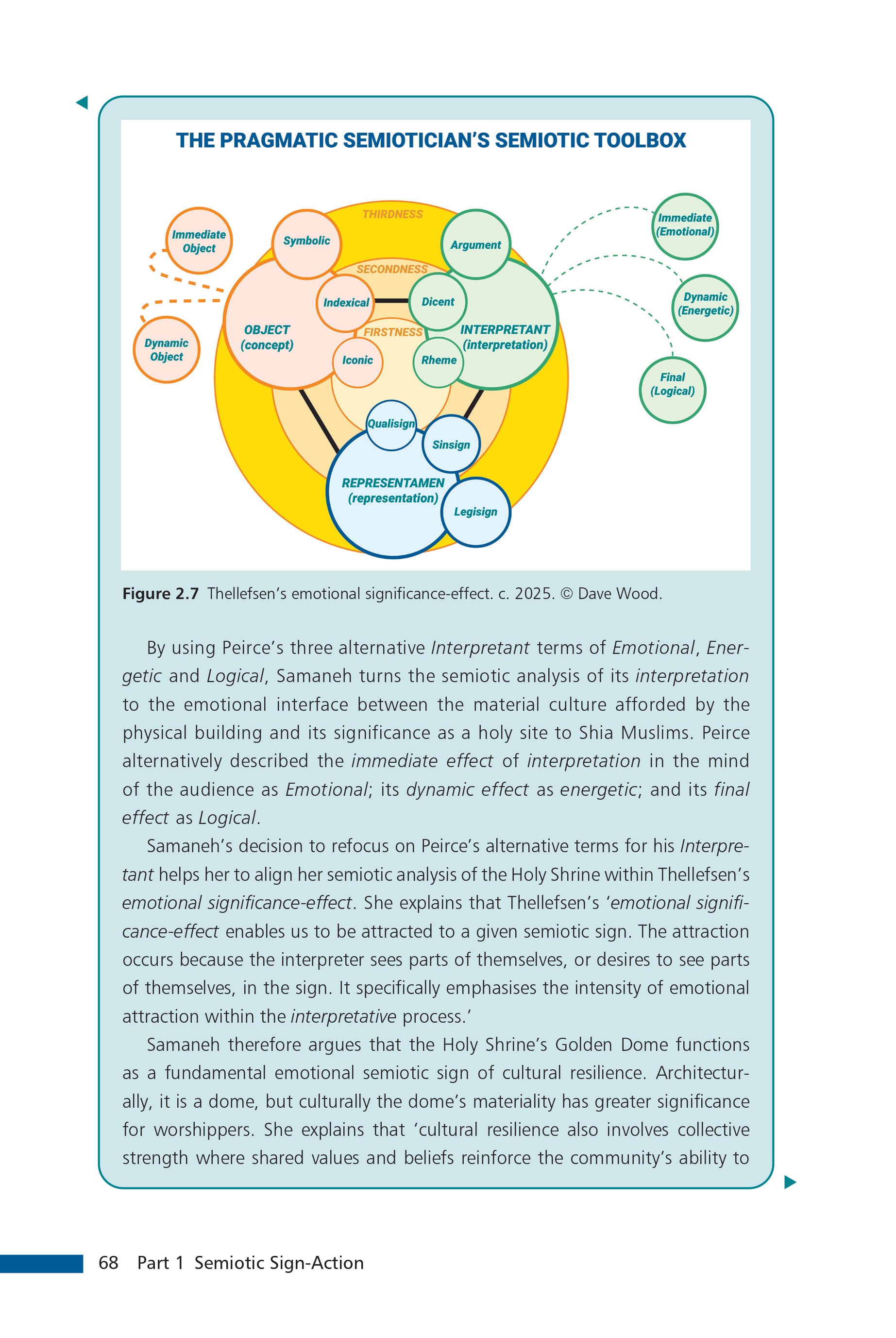
Case study three then bridges the socio-cultural semiotic reading of the past to the urban present through Peircean theory in architecture. It ends on before Samaneh’s research highlighting how a semiotic sign's ability to attract interpretation happens through Emotional resonance (see next image).
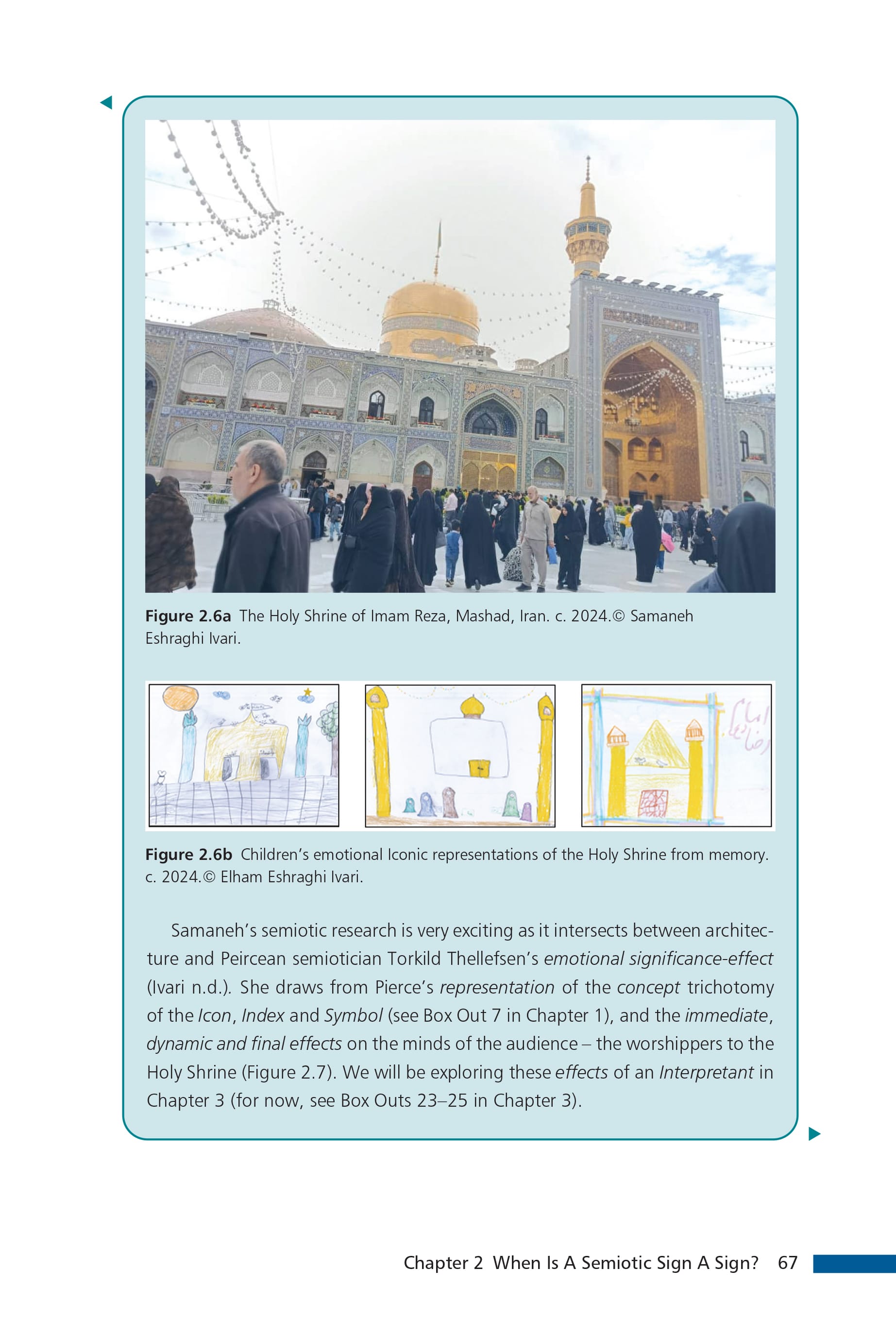
Samaneh has developed a pragmatic semiotic toolkit to explore how socio-cultural meaning is constructed and sustained in the Holy Shrine of Imam Reza in Iran. Her toolkit utilises Peircean semiotician Torkild Thellefsen’s emotional significance-effect (see next image) to turn semiotic analysis to the emotional interface between the material culture afforded by a physical building and its significance to the people who use that building.
This case study gives you an insight on how pragmatic semiotic theory can help us understand how the material culture we surround ourselves with is deeply meaning-bearing. Semiotic sign-action (Semiosis) aids how we unlock socio-cultural meaning.
The Book
Semiotics for Designers and Illustrators is scheduled to be published in February 2027 by Bloomsbury Visual Arts. Check back to this newsletter for pre-ordering news and even discount codes …watch this space.
The Videos
Case study two is also previewed in Semiosis 101’s season 5 episode 5.7 on Patreon and YouTube.
These Semiosis 101 season 5 video episodes will be published on my @Semiosis101channel over the next few months on YouTube. Or you can watch the entire season 5 of twenty Semiosis 101 episodes months ahead of YouTube with a Semiosis 101 Patreon subscription.
With a Patreon subscription you’ll also get a Semiosis 101 Producer credit on all future YouTube editions (plus other exclusive Patreon-only video content).