013: Spotlight on Chapter One…
Semiotics for Designers and Illustrators book newsletter #13
As I have said many times on my Semiosis 101 YouTube channel and in my Semiotics for Designers and Illustrators book (to be published in February 2027), you illustrators and designers always been working semiotically. You just haven’t realised it until now.
In this week’s book newsletter, I will put the spotlight on what will be in chapter one. This chapter’s primary job is to explain to you what Semiosis is, in order to then contextualise where you can apply this pragmatic semiotic theory into your EXISTING illustration or design practice.
Semiosis is Charles Sanders Peirce’s name for the semiotic sign-action that happens as a result of the effect your visual representation of a concept has on your target audience’s interpretation. Semiosis structures the action of a semiotic sign. Chapter one’s title is What Can Semiotics Do for Me? which begins my book’s first of three themed parts. Part one explains semiotic sign-action.
Within this chapter there are three main points of discussion: firstly, I contextualise Peirce's pragmatic semiotic theory into design and illustration; secondly, I introduce the pragmatic semiotic determination flow; and thirdly, I introduce Semiosis’ three semiotic power levels that structure any visual communication of meaning.
Chapter one helps you to make the connection between pragmatic semiotic signs and the visual language you use in your designs or illustrations to visually communicate. This information pragmatically recalibrates your illustrations or design’s aesthetic beyond mere denotation into semiotically mediated connotational meaning. I help you to understand that semiotic signs already reside in the visual language decisions you make, and can semiotically enhance your aesthetic decision-making.
This chapter is illustrated with new diagrams drawn by me to help you to grasp what the theory means in design or illustration. One diagram (below) explains the semiotic determination flow, from the concept to be visually communicated, through how its representation semiotically controls its mediation for it to be successfully interpreted by your target audience.
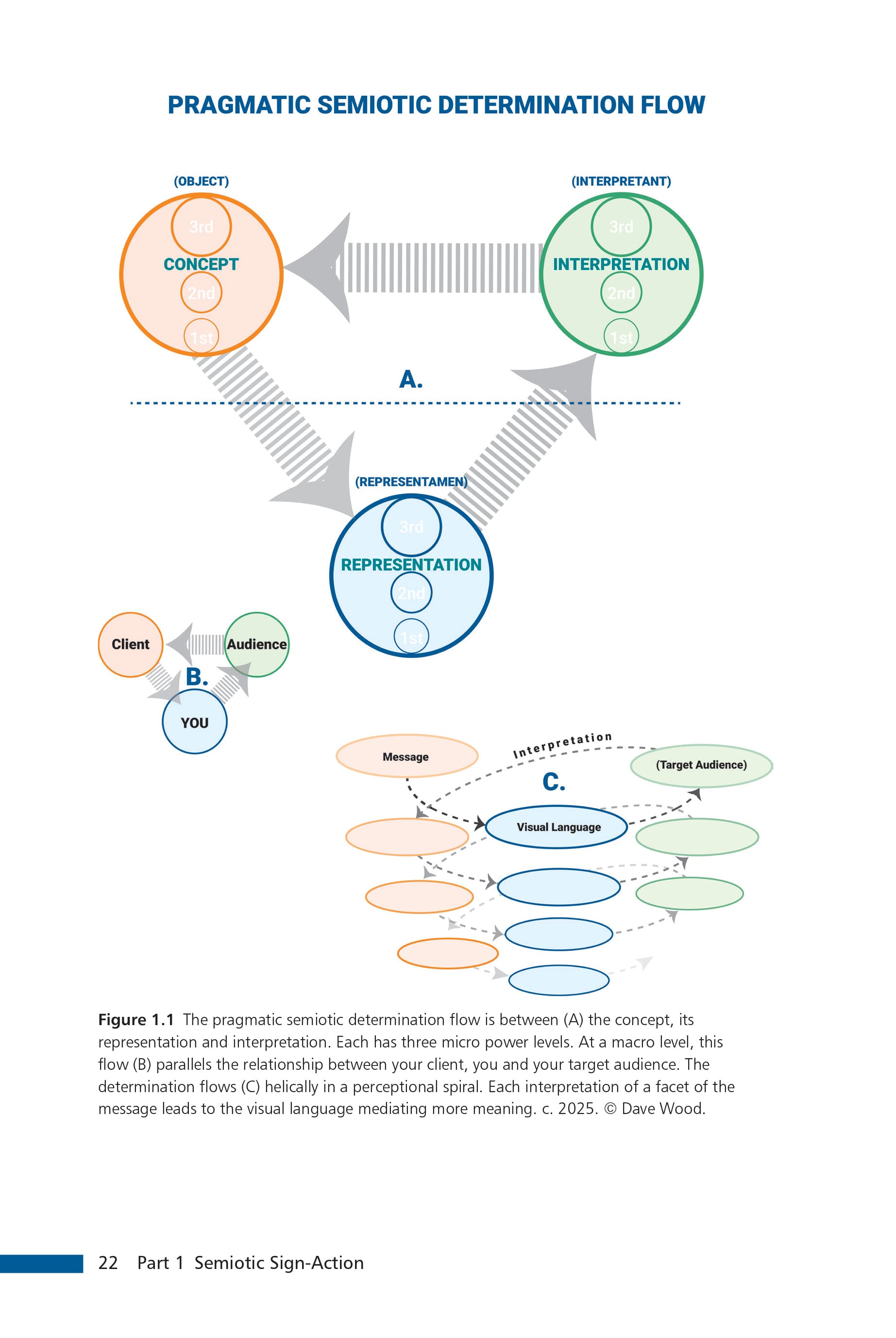
Another diagram then breaks down the three pragmatic semiotic power levels that each pragmatic semiotic sign has within it (next image). If these two diagrams are too theory-heavy then there is another diagram (final image below) that contextualises everything into visual communication building blocks that are more familiar to you.
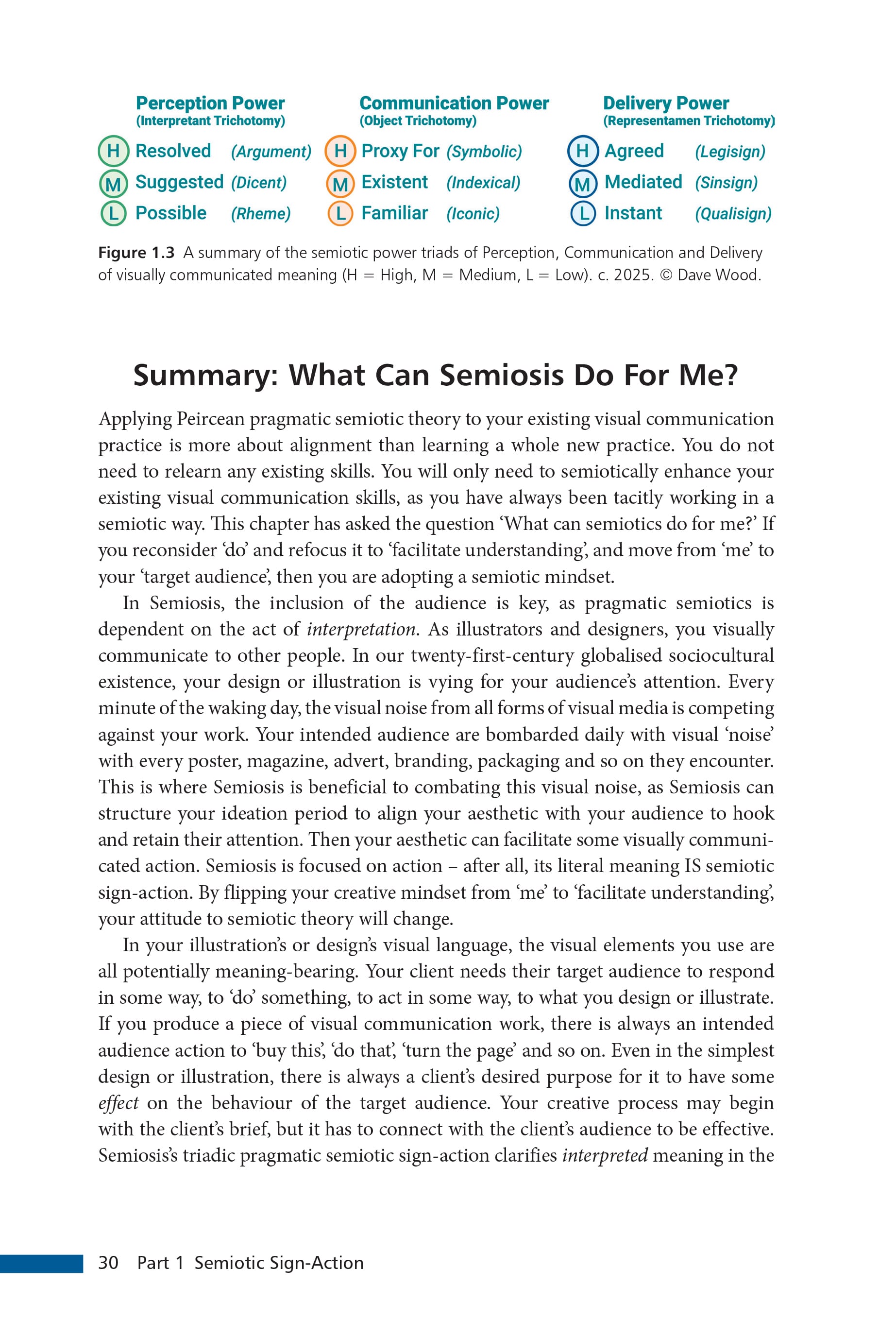
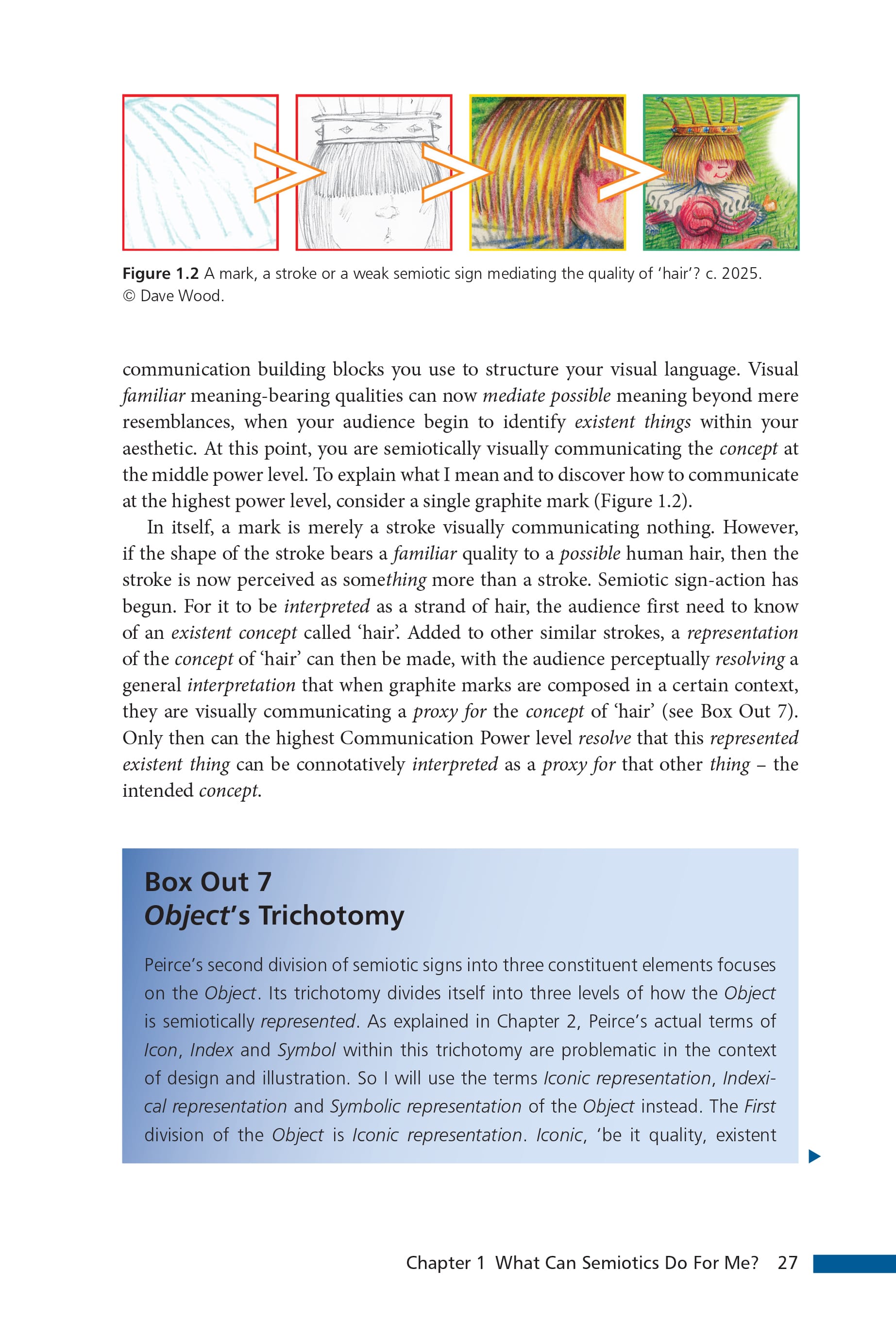
All theory in the book is written in creative-centric plain language and any obtuse theoretical terms are explained in separate box outs that you can read and quickly reference. Chapter one then segues into a case study which we will spotlight in the next newsletter.
The Book
Semiotics for Designers and Illustrators is scheduled to be published in February 2027 by Bloomsbury Visual Arts. Check back to this newsletter for pre-ordering news and even discount codes …watch this space.
The Videos
Chapter one is also previewed in Semiosis 101’s season 5 episode 5.2 and expanded on in episode 5.3.
These Semiosis 101 season 5 video episodes will be published on my @Semiosis101channel over the next few months on YouTube. Or you can watch the entire season 5 of twenty Semiosis 101 episodes months ahead of YouTube with a Semiosis 101 Patreon subscription.
With a Patreon subscription you’ll also get a Semiosis 101 Producer credit on all future YouTube editions (plus other exclusive Patreon-only video content).