027: Spotlight on Chapter Eight
Semiotics for Designers and Illustrators book newsletter #27
In the penultimate chapter of my Semiotics for Designers and Illustrators book I introduce two ‘new’ semiotic tools to help you illustrators and designers to encode deeper meaning into your visual language decisions.
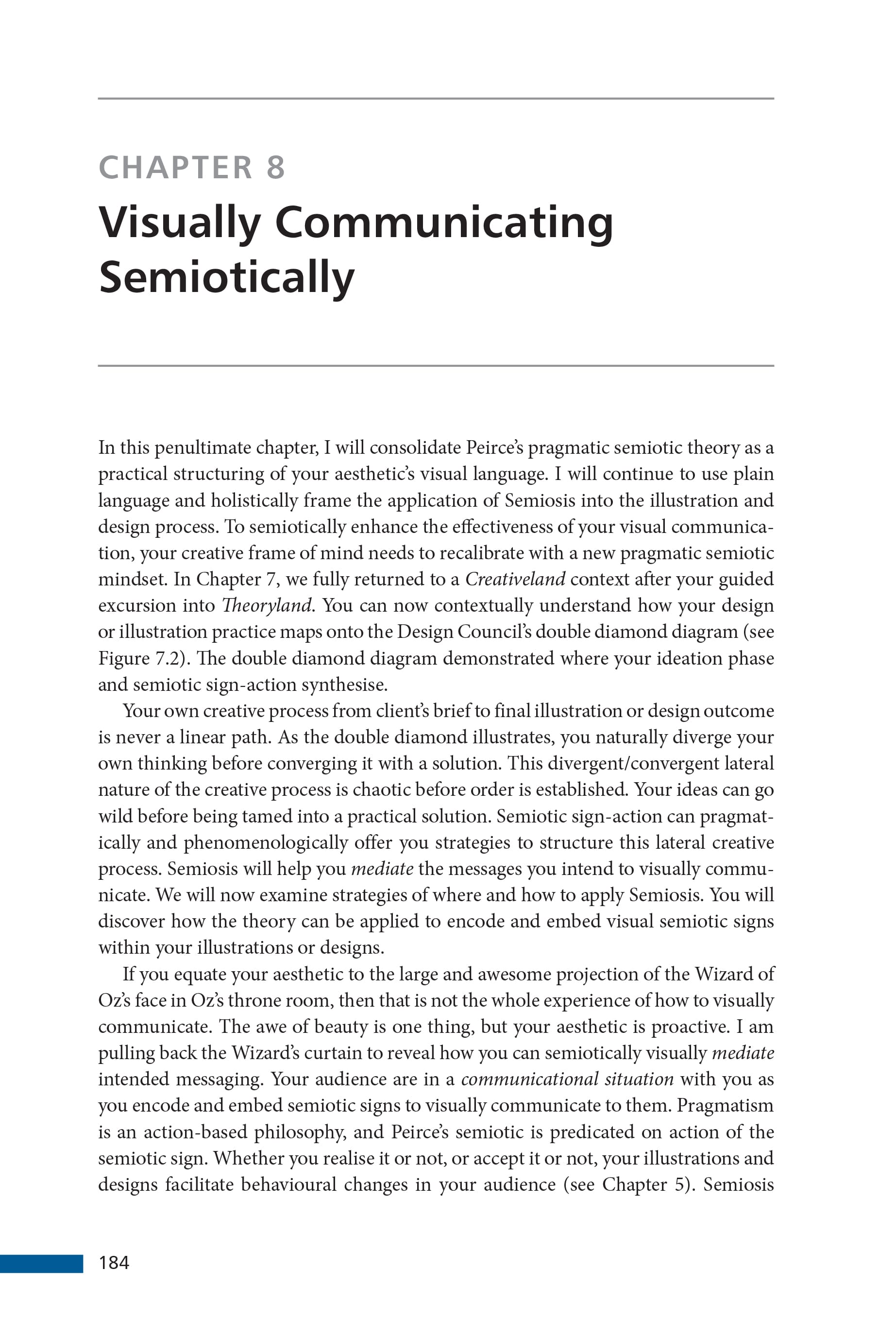
This chapter’s title is Visually Communicating Semiotically and as a chapter it sits midway in the book’s final part on the theme of visually applying Semiosis into your existing illustration or design practice.
This is a practical chapter as it utilises two existing methods that creatives may already be aware of …or not. The methods that already aid visual communication are the SCAMPER method and Gestalts. I adapt them to help you apply the pragmatic semiotic theory of Charles Sanders Peirce to help your ability to improve your ability to visually convey connotative meaning to your target audience.
In case you are not aware of either method, let me give you a quick primer. SCAMPER is a lateral thinking mnemonic which helps you to generate and develop creative ideas. This method helps creatives’ ideate more ideas from a few initial thoughts. From your first sketched ideas SCAMPER can be used to Substitute, Combine, Adjust, Modify, Put to other uses, Eliminate and Reverse visual elements and compositions.
SCAMPER helps you to diverge your generation of ideas, while Semiosis helps you to strategise how to ensure those ideas will converge to visually communicate what you intend. Gestalt theory is a grouping of psychological principles on how humans perceive whole things at the macro level before any micro parts are perceived. At the end of chapter eight I describe six Gestalt principles and how they map to Semiosis.
Gestalt theory provides a psychological perspective of perception in its six principles Similarity, Continuation, Closure, Proximity, Figure/Ground and Symmetry. There are many more gestalts, but these six are the most relevant to visual communication. Gestalts aids semiotic compositions. Semiotic sign-action structures how to apply these six principles as you use your visual language to illustrate or design.
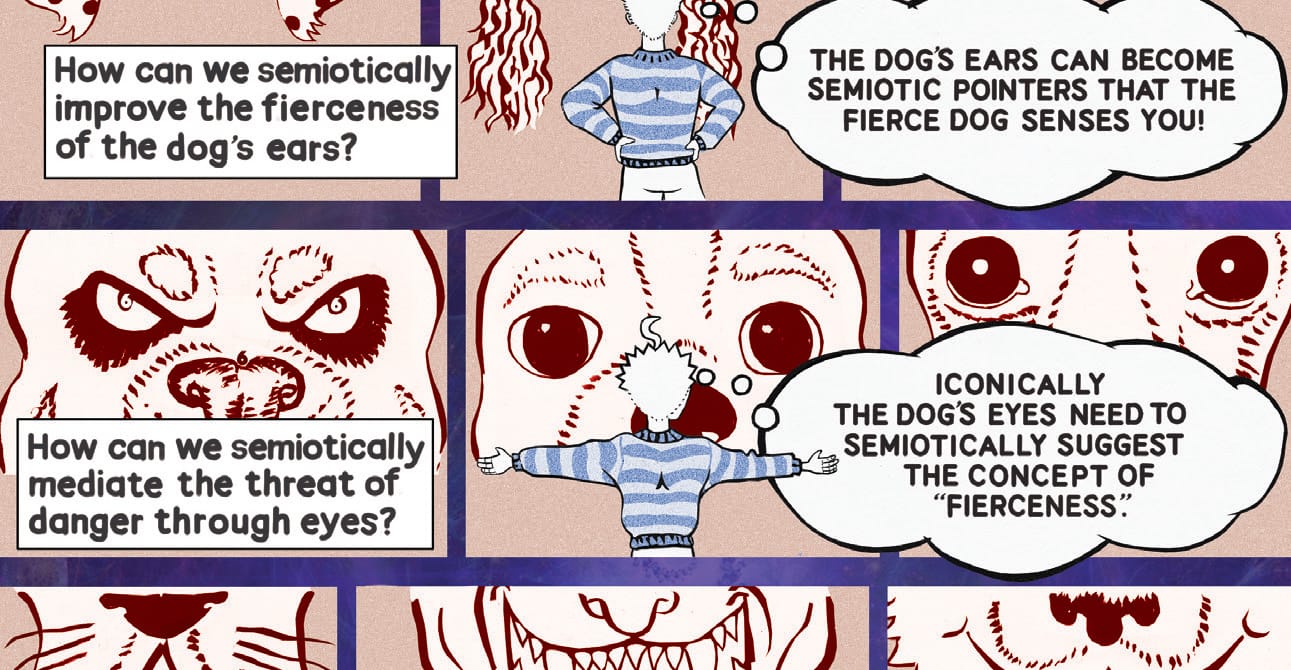
Chapter eight helps you understand how they help you to semiotically structure your visual language (using semiotic signs) to mediate your audience to interpret what your visual representation of the concept is intending to communicate. Also in this chapter, in another comic strip infographic, our intrepid Little Creative in Theoryland® helps you to visualise how the SCAMPER method semiotically works.
This penultimate chapter provides you visual communicators with tools to finally apply semiotic theory into designs or illustrations.
The Book
Semiotics for Designers and Illustrators is scheduled to be published in February 2027 by Bloomsbury Visual Arts. Check back to this newsletter for pre-ordering news and even discount codes …watch this space.
The Videos
Chapter eight is also previewed in Semiosis 101’s season 5 episode 5.14 on Patreon and YouTube.
These Semiosis 101 season 5 video episodes will be published on my @Semiosis101channel over the next few months on YouTube. Or you can watch the entire season 5 of twenty Semiosis 101 episodes months ahead of YouTube with a Semiosis 101 Patreon subscription.
With a Patreon subscription you’ll also get a Semiosis 101 Producer credit on all future YouTube editions (plus other exclusive Patreon-only video content).