025: Spotlight on Chapter Seven
Semiotics for Designers and Illustrators book newsletter #25
As 2026 is fast approaching its end, and Bloomsbury Visual Arts is still on schedule, my Semiotics for Designers and Illustrators book is now about 3 months away from its launch in February 2027.
This week’s book newsletter puts its spotlight on chapter seven of my book. This chapter’s title is The Divergent/Convergent Semiotic Creative Process and it opens the final theme of the book on the subject of visually applying Semiosis into your existing illustration or design practice.
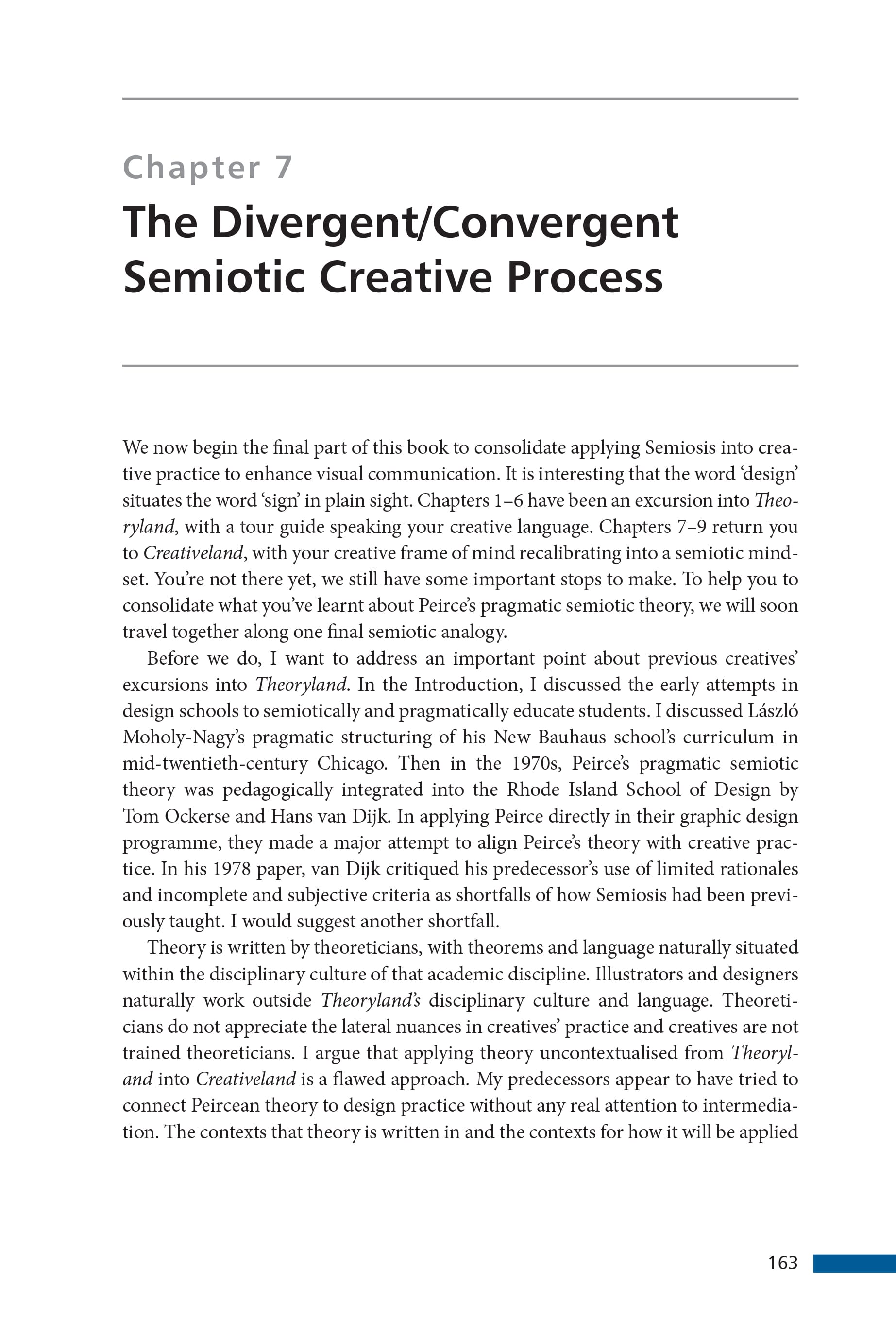
One of the important lessons in my book is that you creatives have always been working semiotically, but you’ve just not realised how. Chapter seven begins with answering the crucial ’So what?’ question any creative can ask during their creative process. This question makes you consider how your visual communication decisions are effectively mediating what you intend.
A ‘So what?’ question is beneficial to non-theoreticians to cut through any theoretical obfuscation. It helps frame your strategies to implement Semiosis to enhance how more effectively you can visually communicate.
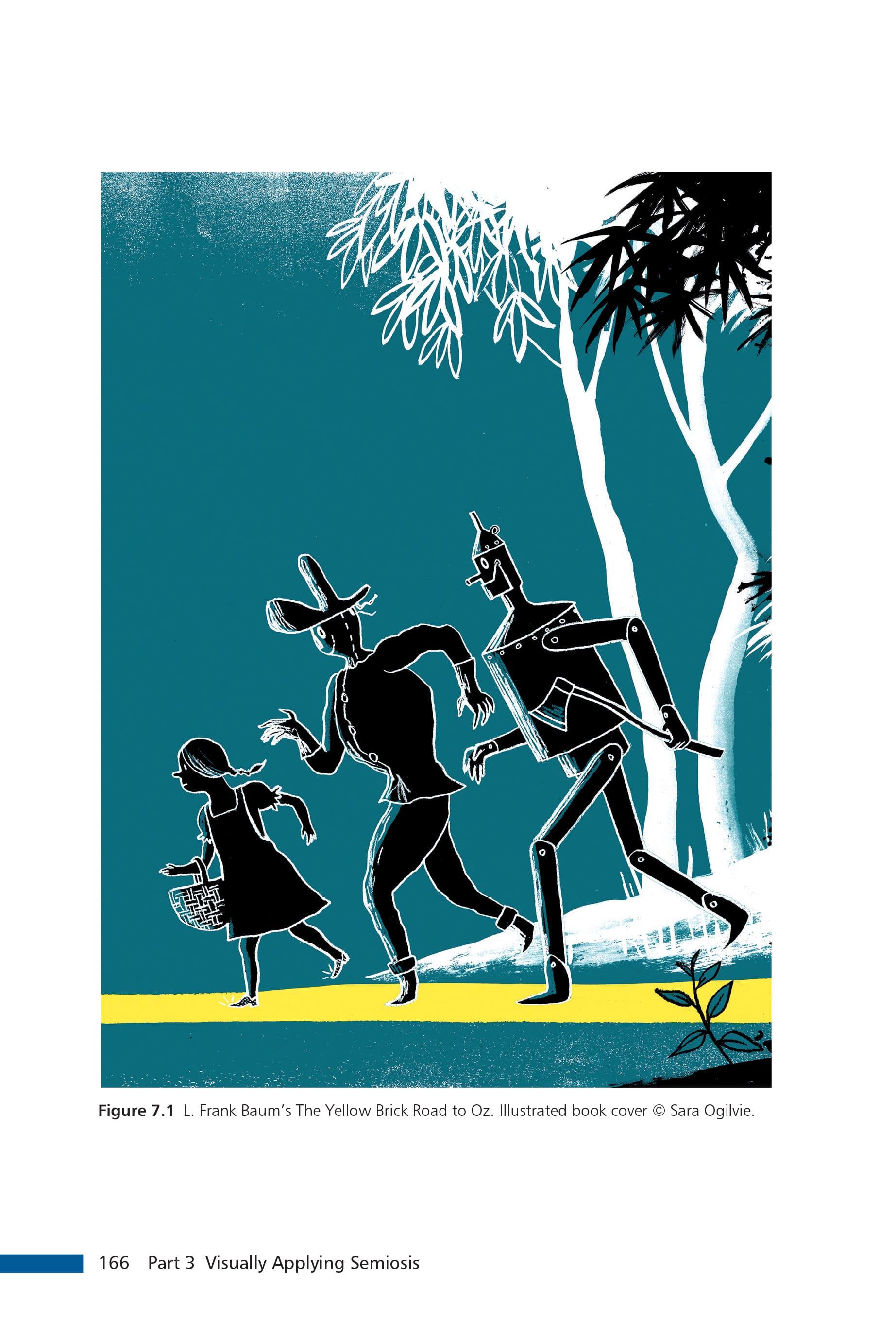
I use a Yellow Brick Road analogy to contextualise how Semiosis theoretically works in a visual way. Then I utilise the Design Council’s double-diamond diagram to explain four divergent/convergent divergent/convergent phases of the creative process, from brief to outcome. Our analogous Yellow Brick Road may go to Oz’s Emerald City but a traveller’s journey on that road is never just procedural. There will always be unexpected adventures and impromptu dances along its yellow path.
Much in the same non-procedural way, Semiosis is a road from instant perception of meaning-bearing to understanding what is semiotically meant. The power of the semiotic sign-action keeps audience interpretation on track as you visually communicate.
Chapter seven helps you grasp how Semiosis works within a defined creative process, which in turn maps to the different cycles within Semiosis itself. I utilise The Design Council’s design double-diamond diagram to summarise the creative process for designers and illustrators. This visualisation of two phases of divergence and convergence allows the mapping of where applying Semiosis into your own process happens.
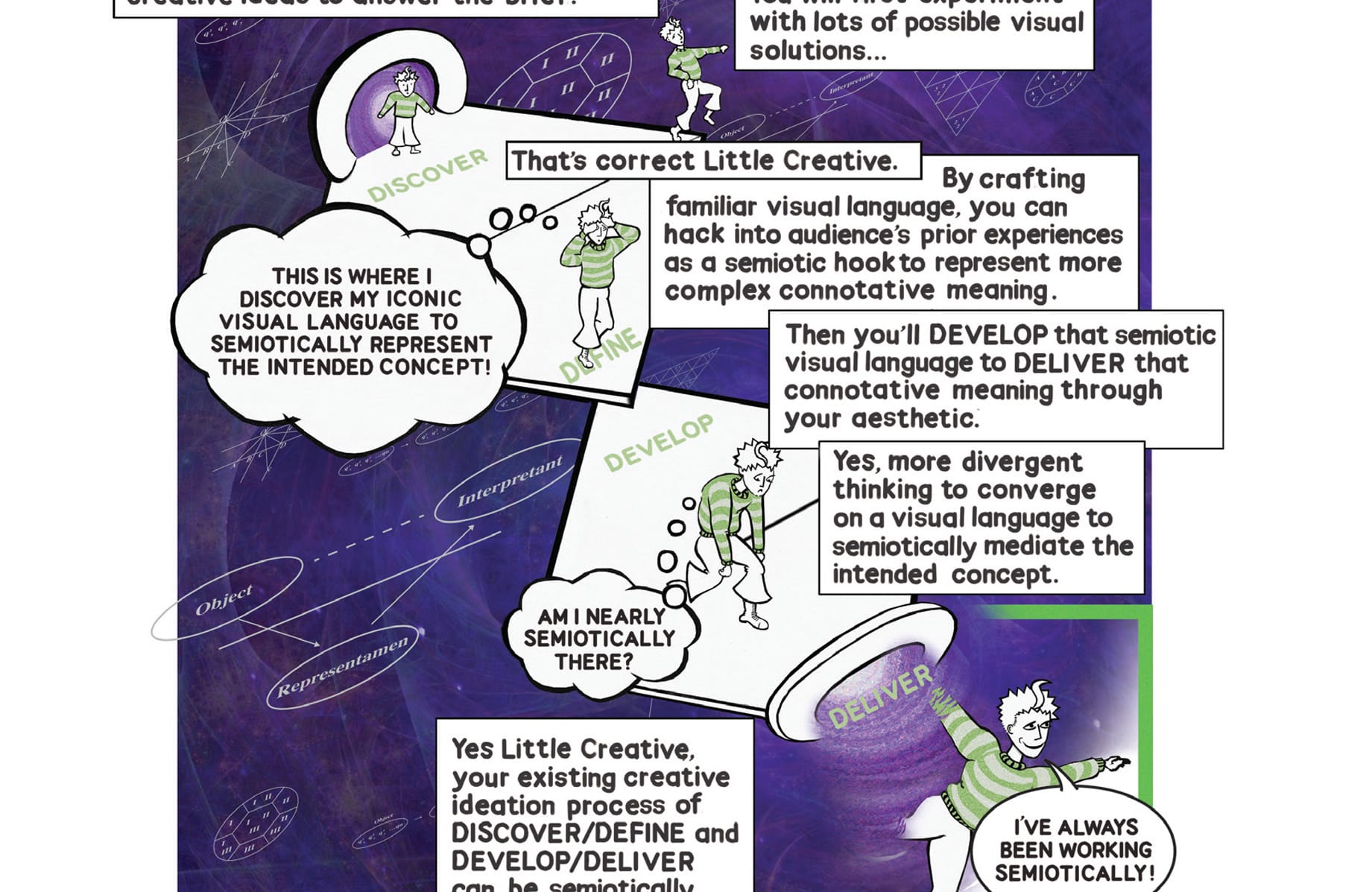
Divergence in your thinking, researching and creative ideation can be semiotically strengthened with the Logic of Design - Charles Sanders Peirce’s Abductive reasoning - otherwise known as a working Hypothesis. Chapter seven prepares you (the reader) to take a pragmatic semiotic turn in your existing creative mindset. Then in the next chapter of my book will introduce you to two ‘new’ semiotic tools to help you apply Peirce’s pragmatic semiotics to enhance the effectiveness of your visual communications.
The Book
Semiotics for Designers and Illustrators is scheduled to be published in February 2027 by Bloomsbury Visual Arts. Check back to this newsletter for pre-ordering news and even discount codes …watch this space.
The Videos
Chapter seven is also previewed in Semiosis 101’s season 5 episode 5.14 and is expanded on in episode 5.15 on Patreon and YouTube.
These Semiosis 101 season 5 video episodes will be published on my @Semiosis101channel over the next few months on YouTube. Or you can watch the entire season 5 of twenty Semiosis 101 episodes months ahead of YouTube with a Semiosis 101 Patreon subscription.
With a Patreon subscription you’ll also get a Semiosis 101 Producer credit on all future YouTube editions (plus other exclusive Patreon-only video content).