015: Spotlight on Chapter Two…
Semiotics for Designers and Illustrators book newsletter #15
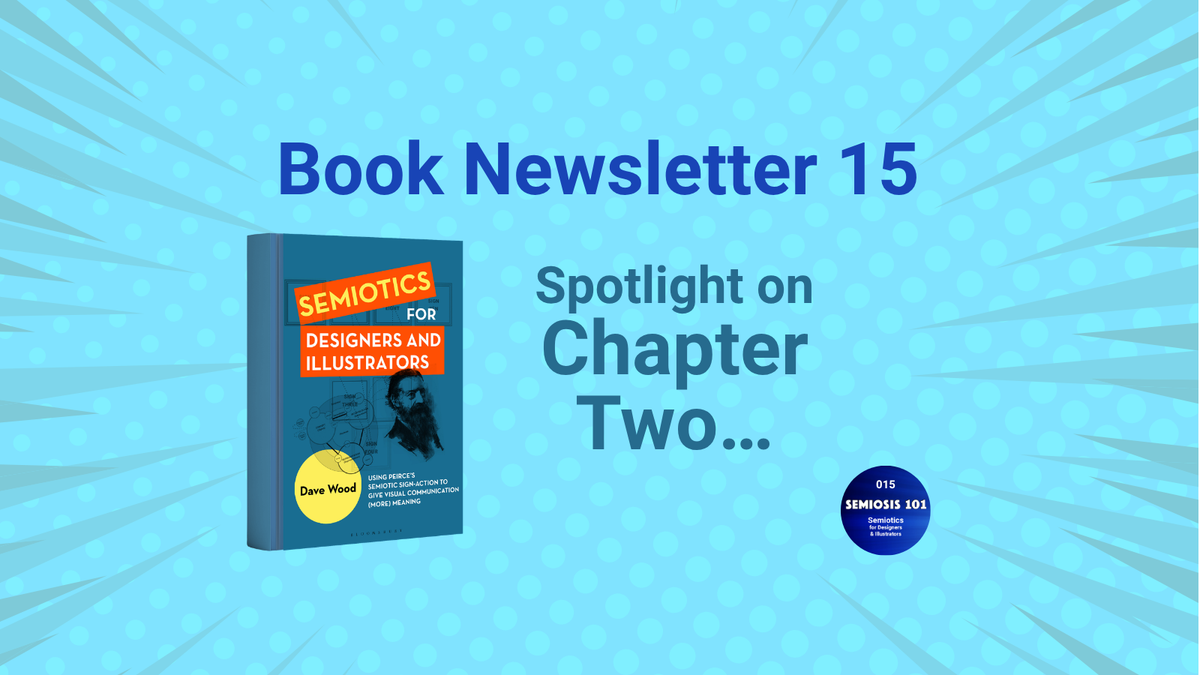
As I’ve stated in earlier newsletters, my Semiotics for Designers and Illustrators book (February 2027) has nine chapters split into three parts. Part one explains semiotic sign-action and chapter two is titled When Is A Semiotic Sign A Sign?
Apart from dealing with the obvious explanation (pragmatically speaking) of what a semiotic sign is, I spend time contextualising Charles Sanders Peirce’s pragmatic semiotic theory and reframe the conversation specifically onto visual semiotic signs. Peirce was a polyglot but he wasn’t a designer or illustrator. That is why I have to parse his thinking into examples relevant to visual communicators and this begins with a semiotic sign.
Spoiler alert: I am not discussing the design of signage here. Way finding are not semiotic signs …but they do use semiotic signs in the signage.
If that conundrum is hurting your head then chapter two is there to recalibrate your creative mindset.
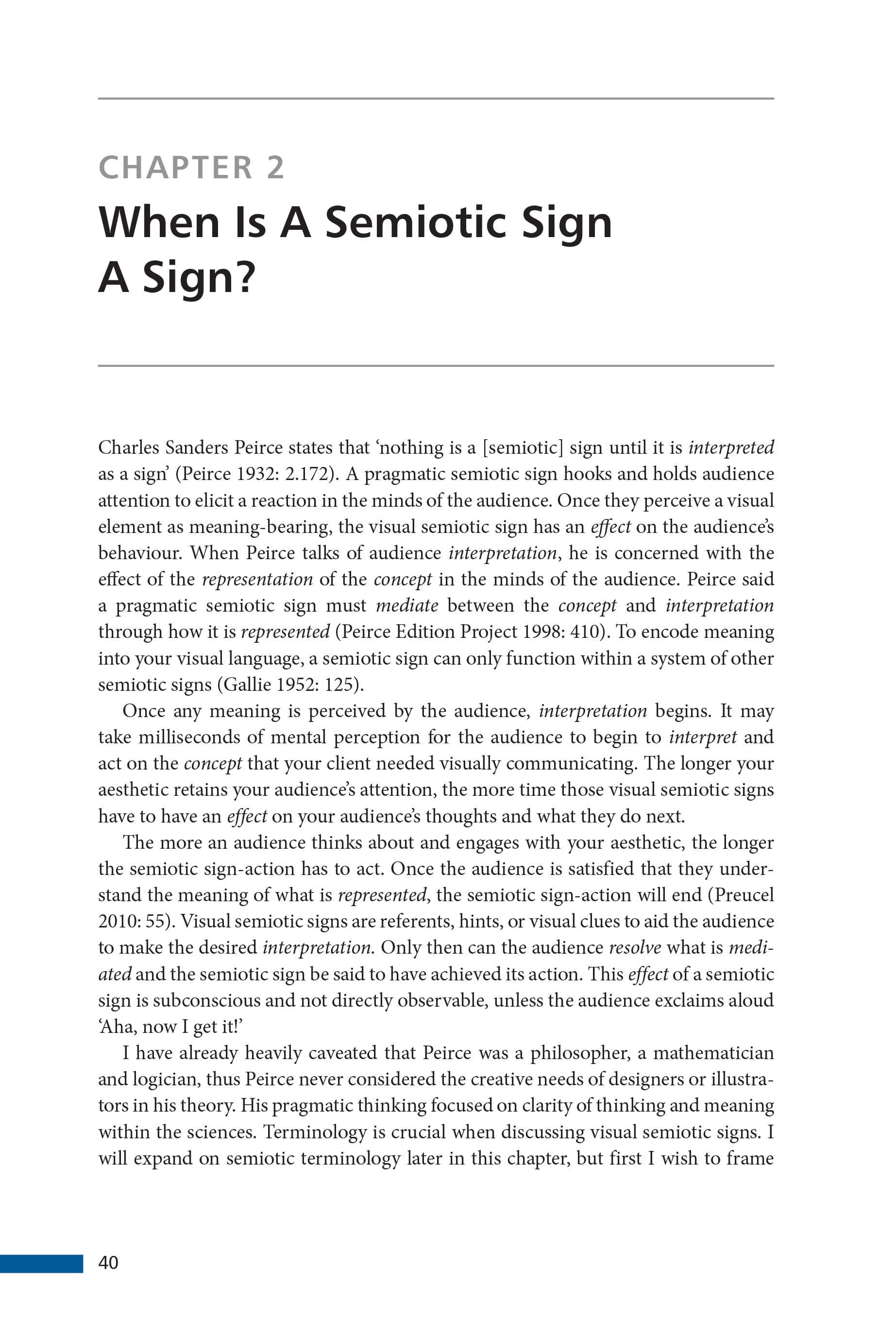
Chapter two goes deeper into an examination of the three semiotic power levels. It then goes further to explain core Peircean semiotic theory using plainer creative-centric language to contextualise semiotic mediation. I introduce the useful idea that your visual language first semiotically ‘hooks’ audience attention. Your aesthetic decisions must then retain that attention to begin to visually communicate connotative meaning beyond the denotative.
Pragmatically, weak visual semiotic signs trigger audience perception that there is more meaning to be interpreted beyond the initial thing they see. Visual semiotic signs are semiotic proxies for the represented concept. Once the intended meaning begins to form in the minds of the audience, then meaning is generally agreed that THIS visual element means THAT now.
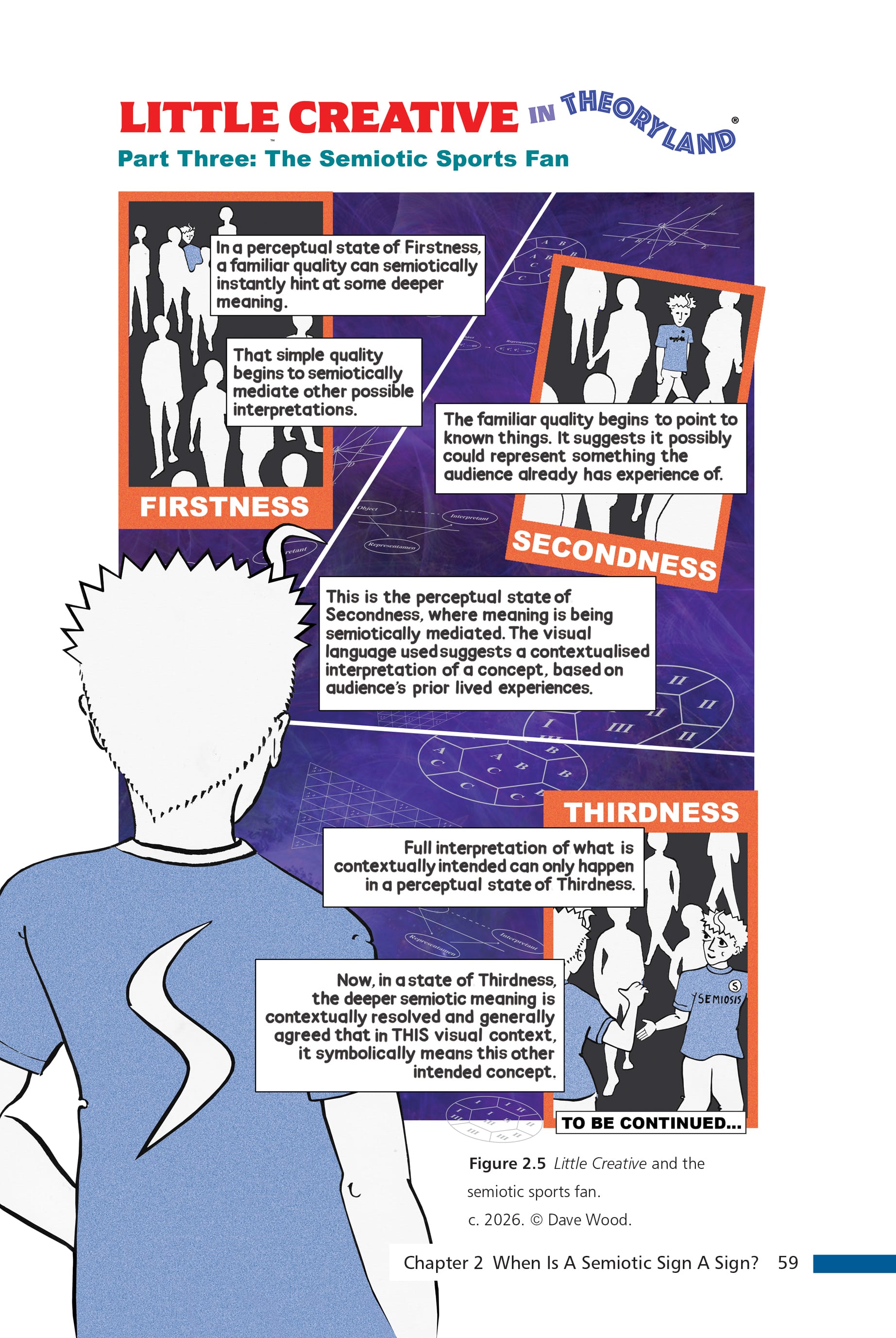
The semiotic sign-action is for your visual language to have a perceptual effect on the minds of your target audience. Chapter two concludes by defining when a visual element in your visual language is a semiotic sign. To successfully achieve this, I contextualise Peirce’s four pragmatic conditions that define a semiotic sign. I also use my second and third Little Creative in Theoryland® strips to demonstrate how this visually works.
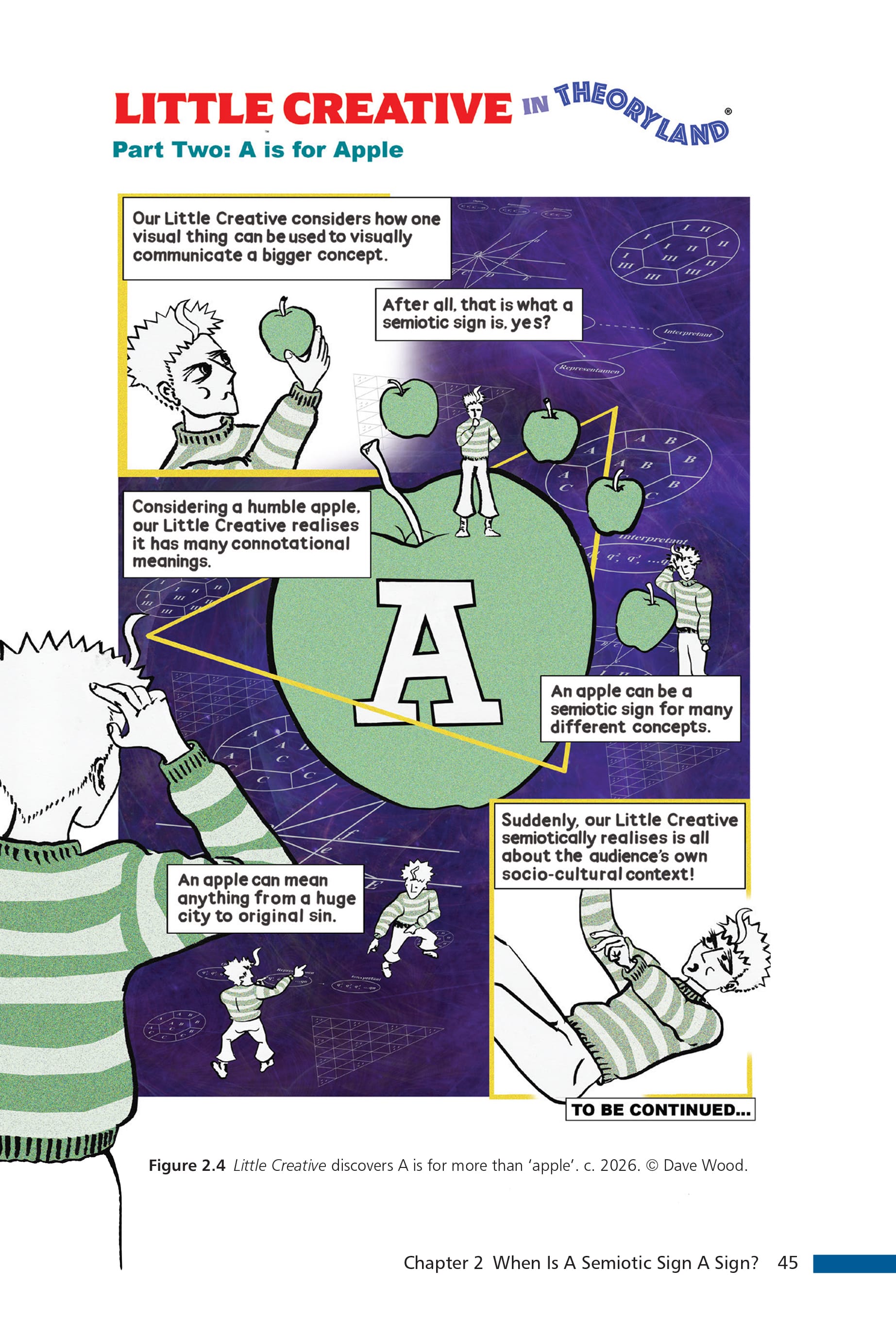
In A is for Apple our Little Creative grasps that designers and illustrators need to appreciate their audience’s socio-cultural experiences when making visual language decisions. Then in The Semiotic Sports Fan our Little Creative grasps how Peirce’s three phenomenological states of perception structure the effects of representation to interpret what meaning is intended (LC’s sport shirt is obviously blue as my family are all Everton FC fans).
The Book
Semiotics for Designers and Illustrators is scheduled to be published in February 2027 by Bloomsbury Visual Arts. Check back to this newsletter for pre-ordering news and even discount codes …watch this space.
The Videos
Chapter two is also previewed in Semiosis 101’s season 5 episode 5.5 on Patreon and YouTube.
These Semiosis 101 season 5 video episodes will be published on my @Semiosis101channel over the next few months on YouTube. Or you can watch the entire season 5 of twenty Semiosis 101 episodes months ahead of YouTube with a Semiosis 101 Patreon subscription.
With a Patreon subscription you’ll also get a Semiosis 101 Producer credit on all future YouTube editions (plus other exclusive Patreon-only video content).