Free Semiosis 101 Transcript 4.17:
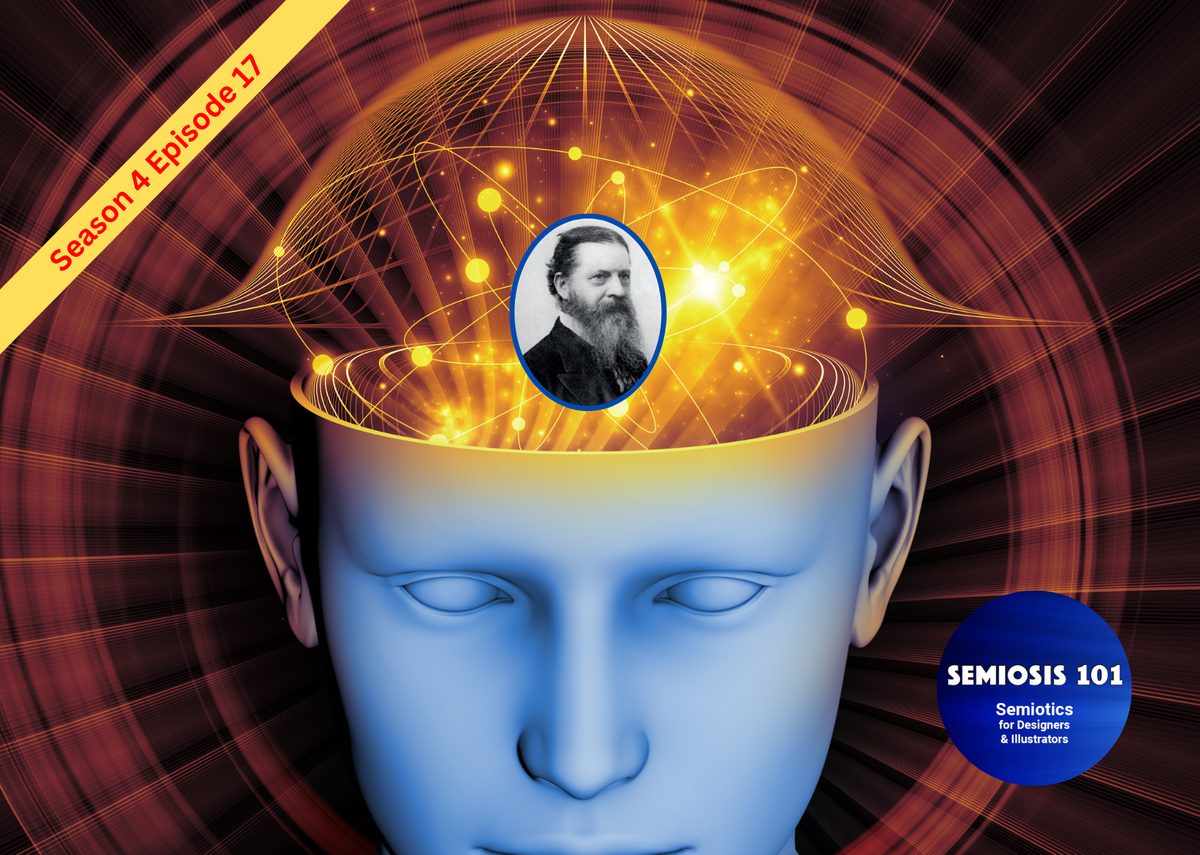
How Can CREATIVITY BE ENHANCED by Engaging Our Audience’s Intuition?
Hello readers.
In this free transcript for the episode 4.17 published on Semiosis 101 on Weds 10th December 2025, we semiotically consider where your visual language can use Semiosis to avoid miscommunication. Yes, we are back to second-order thinking.
We need to consider what our audience interprets, to ensure our visual language decisions visually communicates what we intend. In our visual language choices, we can apply Semiosis to enhance what we intend is visually communicated to our audience. Let us explore how…
Watch the free episode on YouTube for the full impact…
…and here is the episode’s transcript.
How Can CREATIVITY BE ENHANCED by Engaging Our Audience’s Intuition?
Let us call this the “Well, THAT looks like THIS” enigma. Yes, we are back to second-order thinking. We need to consider what our audience interprets, to ensure our visual language decisions visually communicates what we intend. In our visual language choices, we can apply Semiosis to enhance what we intend is visually communicated to our audience. Let us explore how…
“Well, I think THAT looks like THIS.”
No matter what we are designing or illustrating, we expect our final outcome will clearly visually communicate what we intended, yes? However, with no criticism of your personal creative skills, your target audience may not see what you see.
In this 17th episode of Semiosis 101’s season four, we semiotically consider where your visual language can use Semiosis to avoid miscommunication. We are not talking about creative genius nor ego. Neither is helpful. However, we WILL over the next nine minutes be discussing human-centred design in the CONTEXT of Semiotic sign-action. Your own developing semiotic mindset will now begin to synthesise many of this season’s epiphanies.
What? You have no epiphanies yet?
Well, you will if you watch the previous Semiosis 101 episodes after this episode.
One of the principle design books I have referenced throughout season three is Klaus Krippendorff’s The Semantic Turn. In his book, he makes a comment about audience intuition which I will rehash, “[illustrators and] designers always straddle between what can be [visually communicated] and what can only be felt or intuited [by the audience].”
I like this mental image he uses of straddling, as visual communication straddles disciplines. I will now re-contextualise his comment through a Semiosis lens and focus on how intuition affects your created aesthetic outcomes. [ASIDE: Yes, I do mean your designs and illustrations, but let us not get side-tracked about media choices].
Your aesthetic outcomes are not passive. They have a visual communication job to achieve. Your aesthetic hooks and retains audience attention so that semiotic sign-action can facilitate interpretation. This audience interpretation of what they see is enabled through your choice of visual language. This visual language may >grammatically< structure quite complex levels of visually communicated meaning, by representing the client’s concept not denotatively, but connotatively.
This complexity can be stripped down into the fundamental building blocks of visual communication, e.g shapes, colours, marks, lines, textures, etc. Individual marks are merely marks, but composed through composition, technique, texture, etc. a simple mark can contribute to deeper meaning. Krippendorff’s qualitative framing of the audience’s interpretation as “felt” and “intuited” is crucial here. What you creatives create is a tangible thing (whether it is a printed or digital design or illustration).
How your audience understands what you are visually communicating is subconscious, perceptual, qualitative and even emotional. Your ideation needs to accommodate a qualitative audience. From a pragmatic perspective, your aesthetic is not passive. The very nature of the visual language you select to build the aesthetic has multiple visual components. Each visual component has the potential, however weak, to be meaning-bearing to the audience.
If you use the colour green, say, in your visual language because (using the old cliché) your client likes it, this can be the difference between successful visual communication …or a mis-communication failure. Green is green. But even a colour can accrue socio-cultural meaning to it. Let us say your client is eco-friendly. The colour green has one socio-cultural contextual meaning for ecological or environmental concerns. If your client is a massive polluter then the use of green will be challenged as green-washing.
Green is just a colour. Green is contextually and semiotically, meaning-bearing. Used in the wrong audience context, any simple element in your visual language could divert audience intuition to something else you do not intend them to consider. Let me refer to this as the “Well, THAT looks like THIS” enigma that designers and illustrators straddle every day.
What you visualise in your aesthetic, using your chosen visual language, clearly only visually communicates THAT (denotative). How can the audience see THAT as a proxy for THIS??? (connotative).
In this season we have unpacked how audience lifeworlds inform how the audience will interpret new things. When you ideate, you are mindfully seeking ways to visually communicate the concept FOR audience intuition. The visual elements you use in your visual language are, in plain sight, already suggesting meaning to your audience. But is it what you intend?
We have all seen the optical illusions, a picture of a vase (or is it two faces?) Or a rabbit, (or is it a duck?) Yes? Well, I am not talking about those intentional illusions when I use the “Well, THAT looks like THIS” enigma. What I am referring to is the difference between visually communicating and mis-communicating. That is a semiotic fine line between the representation of, and the interpretation of, the intended concept. This is not a criticism of your creative skills in any way, but rather its drawing your attention to how YOU represent the client’s concept to your target audience; AND how your target audience interprets what you represent.
Your designs and illustrations are always clearly visible, aesthetically there in plain sight for everyone to enjoy and appreciate your talent. A brochure, a poster, a piece of packaging, etc. are tangible artefacts the audience can see, touch and interact with. To the audience a brochure is clearly a brochure, etc. Obviously these are just formats, and the visual communication lies within the designs and illustrations in any artefact. We are concerned with what some of you may refer to as a visual “tone of voice” or connotative meaning. If you want to read more about this then check out the Semiosis 101 Semiotic Resource on semiosis101.online. Link is below in the description.
I keep returning to branding for examples to explain this. How does Coca Cola ensure you do not confuse its brand of cola with Pepsi? Yes, obviously in how the brand’s designs are different to each others, duh! But think about this. You see the Iconic red and white of Coca Cola, or Iconic the red, white, black and blue of Pepsi. Both brands Iconically use red and white but you, as shoppers, learn the difference to differentiate buying cola by one brand from the other brand’s cola.
Notice I use the term Iconic not as a synonym for CLASSIC, but in its actual semiotic usage for Iconic representation? This is the weakest semiotic level of meaning-bearing representation in Semiosis, using qualities such as colour (red and white) and shapes - the white swirl of the lettering and ribbon. These colour combinations and swirly ribbons in this branding context help visually communicate Coca Cola’s brand. Red, white and swirls in another context could visually communicate Walls ice cream, or Santander bank, or someone’s favourite type of lollipop.
In one context, the Iconic representation you employ in your visual language will ensure the audience knows it means cola - because the audience socio-culturally have learnt the associations mean cola when they see it. But when the see the same visual elements in an unfamiliar context it can skew the audience’s interpretations. By being mindful of this Iconic representation contextual connection to your audience, you can semiotically ensure your audience are facilitated to the context you need them to be in. If you want them to enjoy a lovely lollipop, you don’t want them thinking what they will taste will be cola and made by a famous brand.
Obviously this is a flippant example. I use it to make you realise that the familiarities evoked in the mind of the audience is Iconic representation. Although Iconic representation is at the simplest level of Semiosis, it is firmly nested within the two higher levels. Iconic representation semiotically mediates the audience from familiar qualities, to existent things. At the highest semiotic power of representation, existent things are generally agreed by the audience to be, in this visual context, proxy for the intended concept.
Intuitively, your target audience’s perception of what they see is partly dependent on their previous experiences, reference points and expectations. They bring these when interpreting what YOU represent with your visual language. In the next episode we begin to consolidate all this Semiosis theory into practice. So, remember to subscribe to be notified when this episode is published. Or become a Semiosis 101 Producer on Patreon and watch all future episodes months ahead of YouTube.
Hint… hint…
Semiosis 101 Semiotic Design Resources is a reader-supported publication. To receive exclusive posts and support my work, consider becoming a free or paid subscriber. Paid subscribers get name checked on all future Semiosis 101 YouTube episodes.
===Semiosis 101 Patreon Producer==============
Become a Semiosis 101 Patreon Producer and get a named producer credit on future video episodes, plus watch all new episodes months ahead of YouTube.
===Semiosis 101 Patreon Exclusives==============
Watch longer Patreon-exclusive Semiosis 101 episodes on applying Semiosis into design and illustration…
PATEXC001 How does semiotics work in illustration?
 Semiosis 101