BLOG 25: Semiotic Sign-Action Cycles
Semiosis 101 - 5 minute semiotic read
I have discussed semiotic determination flow in many blog posts, video episodes and in my 2026 Semiotics for Designers and Illustrators book. This flow is essentially between the concept to be visually communicated; how you visually represent that in your chosen visual language; and how that representation of concept is interpreted by the audience.
This determination flow cycles through concept > representation > interpretation > concept > representation > interpretation > etc. as meaning is understood. This is what Semiosis is and means - a triadic semiotic sign-action where interpretation of what’s represented forms understanding of the intended visually communicated concept.
This cycling of Semiosis is ongoing until
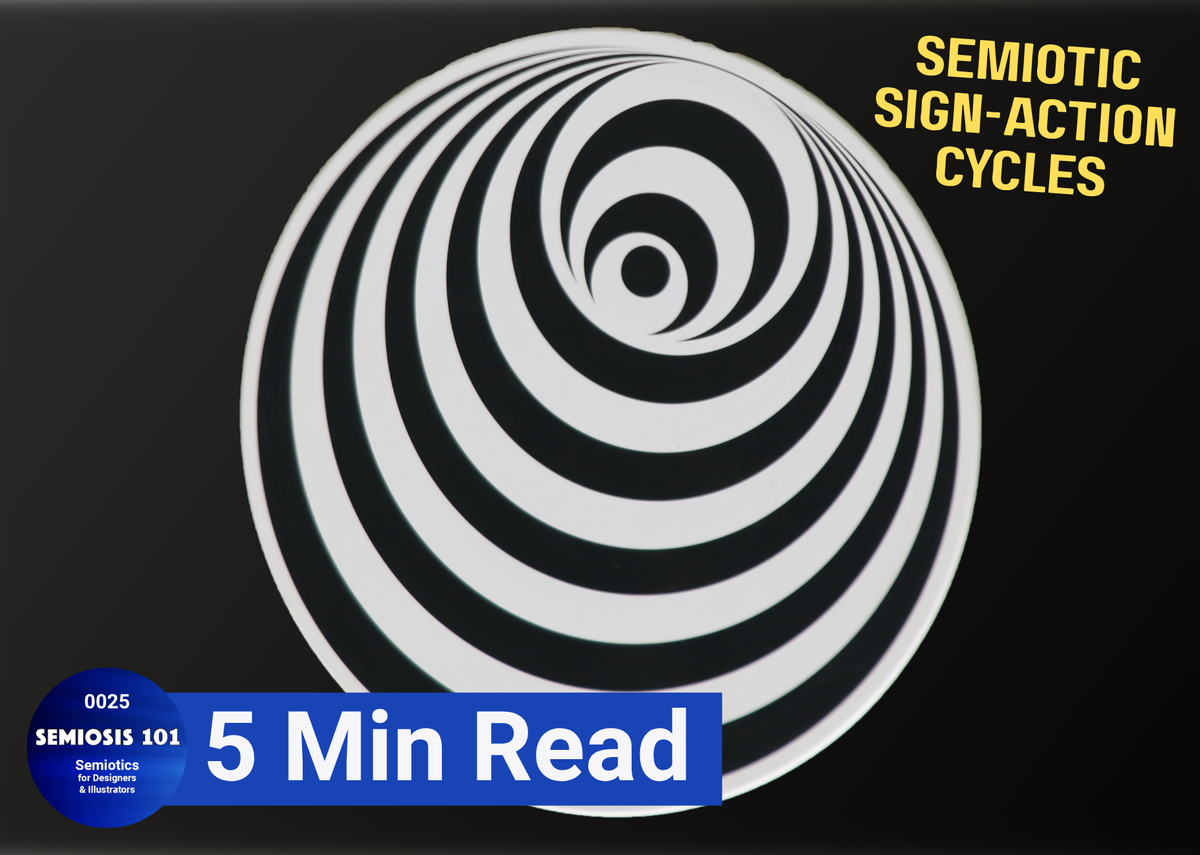
an understanding is achieved or attention is lost. However, this cycling is more helical than circular. Like a funnel, semiotic sign-action focuses audience interpretation on a particular end (the concept), with a broad entry point, narrowing the exit point. A functioning funnel-shape does not have multiple exit points, and neither should design’s or illustration’s aesthetic.
Semiotic sign-action works like a perceptual funnel within your visual language. Your illustration’s or design’s composed visual elements are the visual semiotic signs which channel your audiences’ interpretations of what is being visually communicated.
From how you decide to represent the intended concept through your aesthetic choices, the embedded visual semiotic signs have an effect on your audience. Your target audience, once they perceive meaning in your aesthetic, interprets what is meant in ever decreasing perceptual cycles toward an eventual conclusion.
This semiotic sign-action helical flow also narrows the audience’s context for interpreting what you intended. By applying the principles of Semiosis as you ideate you semiotically structure how your aesthetic mediates meaning, reducing the latitude for miscommunication. The act of Semiosis is ongoing until your audience is subconsciously happy they understand what meaning you are representing through your visual language.
Semiotic sign-action is what you use to encode meaning, and then that encoded semiotic sign-action has an effect on your target audience’s minds. Their act of interpretation is ongoing until the audience gets bored or some other visual thing takes their attention away. Therefore, your semiotically-enriched aesthetic needs to retain their attention to successfully visually communicate.
For your audience to understand and interpret as you desire, your visual communication must facilitate their interpretation from representation to concept. How you semiotically mediate the visual communication needs to narrow the latitude of your target audience’s reference contexts in ever-decreasing cycles toward your intended concept.
Your visual language needs to ensure your audience only interprets what you intend. Therefore, if Semiosis’ semiotic sign-action is ongoing, the pragmatic semiotic determination flow doesn’t simply cycle in a circular motion but helically.
In a helical determination flow the representation, once perceived as meaning-bearing, instantly begins to propose weak resemblances to qualities of things already known to the audience (Iconic representation). The audience’s interpretation of meaning doesn’t simply move from interpretation to the intended concept from the representation in a single cycle.
With each semiotically mediated helical cycle, your aim should be for your audience to determine more meaning from your illustration’s or design’s visual language.
With each mediated helical cycle, semiotic sign-action helps your audience’s understanding to grow and diminish their uncertainty. Your visual language, enriched with many forms of visual semiotic signs (the simple and complex visual elements you compose) needs to mediate for interpretation. This is why your design’s or illustration’s aesthetic is not a passive appreciation of beauty.
Your final aesthetic is pragmatically proactive in semiotically conveying the intended concept FOR different levels of audience perceptual abilities. In Peirce’s Semiosis interpretation is key. Your audience as the interpreters of what you visually communicate draw their interpretations from their previous lived experiences (lifeworlds), which essentially are their socio-cultural reference points to understand new instances of visual communication.
Pragmatically, you are becoming more mindful in your visual language decisions of what your audience will find familiar. By being pragmatically mindful, you can align your illustration’s or design’s visual language to visual qualities the audience are more likely to subconsciously associate with your intended concept. They will continue to subconsciously test their prior experiences for viable meaning against your aesthetic.
 Semiosis 101